Renters Insurance Guide: What It Covers and Why You Need It
A complete guide to renters insurance — what it covers, how much it costs, what ALE (Additional Living Expenses) includes, and how to file a claim when you're displaced from your rental.
Invested Escapes
Temporary Housing Experts
Renters insurance is the most overlooked insurance product in America. According to the Insurance Information Institute, nearly half of all renters don't have it — either because they think their landlord's insurance covers their belongings, they think it's too expensive, or they simply don't know what it covers. This guide fixes that. We'll walk through everything: what renters insurance covers (and doesn't), how much it costs, what ALE (Additional Living Expenses) includes, how to file a claim, and how to get placed in a furnished home if you're ever displaced from your rental. If you rent your home, this is the one insurance product you genuinely need — and it costs less than a single streaming subscription.
What Is Renters Insurance?
Renters insurance — sometimes called tenant insurance or an HO-4 policy — is an insurance policy designed specifically for people who rent their living space. It protects your personal belongings, provides liability coverage if someone is injured in your rental, and pays for temporary housing if your rental becomes uninhabitable due to a covered loss. Importantly, renters insurance does NOT cover the building structure itself — that's the landlord's insurance. Your renters policy covers YOUR stuff, YOUR liability, and YOUR temporary living expenses.
A standard renters insurance policy includes three main components: Personal Property coverage (your belongings), Liability coverage (if someone gets hurt or you cause damage), and Additional Living Expenses (ALE) coverage (temporary housing if you're displaced). For a deeper dive on ALE and how it funds temporary housing, see our <a href="/blog/insurance-housing-guide">complete guide to insurance housing and ALE</a>.
Key takeaway: Renters insurance has THREE protections in one affordable policy — your stuff (personal property), your liability (if someone gets hurt), and your housing if you're displaced (ALE). All three are included in a single policy that typically costs $12-25/month.
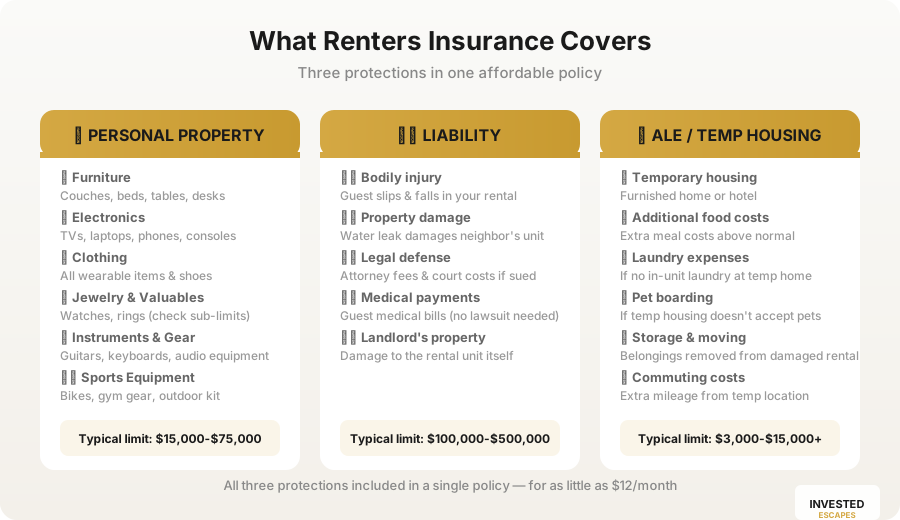
What Does Renters Insurance Cover?
Renters insurance covers more than most people realize. Let's break down each of the three main coverage areas in detail.
Personal Property Coverage 📦
Personal property coverage pays to replace your belongings if they're damaged, destroyed, or stolen — whether inside your rental or away from home. This is the core of renters insurance. If a fire destroys your apartment, a pipe bursts and ruins your furniture, or someone breaks in and steals your laptop, personal property coverage pays to replace those items (minus your deductible).
- 📦 Furniture: Couches, beds, dressers, tables, desks
- 🖥 Electronics: TVs, laptops, computers, gaming consoles, phones
- 👕 Clothing: All wearable items, shoes, accessories
- 🍳 Kitchenware: Pots, pans, dishes, small appliances
- 💍 Jewelry & Valuables: Watches, rings, collectibles (may have sub-limits — check policy)
- 📚 Books & Media: Books, records, CDs, collectibles
- 🏋️ Sports Equipment: Bikes, gym gear, outdoor equipment
- 🎸 Musical Instruments: Guitars, keyboards, audio equipment
Liability Coverage 🛡️
Liability coverage protects you financially if you're responsible for someone else's injury or property damage. If a guest slips in your kitchen and breaks their wrist, if your bathtub overflows and floods the apartment below, or if your dog bites someone — liability coverage pays for medical bills, repairs, and legal defense up to your policy limit.
- 🛡️ Bodily injury: If a guest slips and falls in your rental
- 🛡️ Property damage: If you accidentally damage a neighbor's property (water leak, fire)
- 🛡️ Legal defense: Attorney fees and court costs if you're sued
- 🛡️ Medical payments: Small medical bills for guests injured on your premises (no lawsuit required)
- 🛡️ Damage to landlord's property: If you cause damage to the rental unit itself
Additional Living Expenses (ALE) 🏠
This is the MOST relevant coverage for Invested Escapes. ALE pays for temporary housing when your rental becomes uninhabitable due to a covered peril — fire, water damage, smoke damage, or other covered events. If your apartment is damaged and you can't live there while it's being repaired, ALE covers the cost of a furnished home, hotel, or other temporary lodging — plus additional living expenses like food and laundry. For a complete overview of how temporary housing works, see our <a href="/blog/temporary-housing-guide">temporary housing guide</a>.
- 🏠 Temporary housing: Furnished home or hotel while your rental is repaired
- 🍽 Additional food costs: Extra meal costs above normal grocery spending
- 🧺 Laundry: If no in-unit laundry at temporary location
- 🐕 Pet boarding: If temporary housing doesn't accept pets (another reason to request a pet-friendly furnished home)
- 📦 Storage: For belongings removed from damaged rental
- 🚗 Increased commuting costs: Extra mileage from temporary location
- 🚚 Moving costs: Moving belongings to temporary housing and back
ALE is the bridge between renters insurance and Invested Escapes. If your rental is damaged by fire, water, or other covered peril, ALE pays for a furnished home — and Invested Escapes can place you within 24-72 hours. Ask your adjuster for furnished housing, not a hotel.
What Renters Insurance Does NOT Cover
Renters insurance is comprehensive, but it has important exclusions. Knowing what's NOT covered helps you decide whether you need additional policies or endorsements:
- 🌊 Flood damage: Requires separate flood insurance (NFIP or private policy). Standard renters insurance does NOT cover flooding from storms, overflowing rivers, or storm surge.
- 🌍 Earthquakes: Requires separate earthquake insurance. Standard policies exclude earth movement, landslides, and sinkholes.
- 🐛 Pest damage: Bedbugs, termites, rodents, and other infestations are typically excluded — considered a maintenance issue, not a covered peril.
- 💧 Gradual water damage: Slow leaks that develop over time (vs. sudden bursts like a pipe breaking) are usually excluded.
- 🦠 Mold: Often limited or excluded entirely. Some policies offer limited mold coverage with an endorsement; check your policy carefully.
- 💼 Business equipment: Home business inventory and commercial equipment may need a separate business policy or endorsement.
- 🚗 Your car: Even if parked in the rental's garage, vehicle damage is covered by auto insurance, not renters insurance.
- 📱 Roommate's belongings: Each renter needs their own policy. Your renters insurance does not cover a roommate's possessions unless they're listed on your policy.
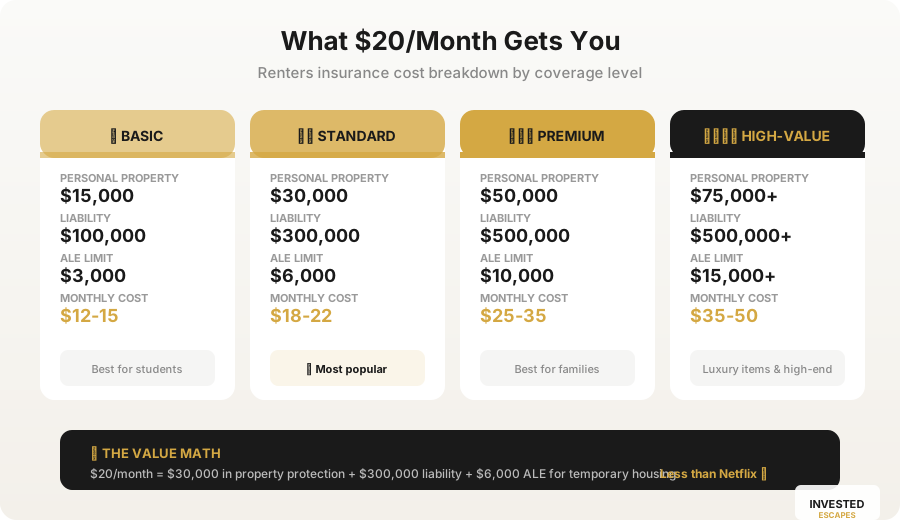
How Much Does Renters Insurance Cost?
Renters insurance is one of the most affordable insurance products available. The national average is about $15-25 per month — less than the cost of a single streaming subscription. Your actual cost depends on several factors: your location, the amount of personal property coverage you choose, your liability limit, your deductible (typically $250-$1,000), and whether you add endorsements for high-value items or additional coverage.
| Coverage Level | Personal Property Limit | Liability Limit | ALE Limit | Monthly Cost |
|---|---|---|---|---|
| 💰 Basic | $15,000 | $100,000 | $3,000 | $12-15/mo |
| 💰💰 Standard | $30,000 | $300,000 | $6,000 | $18-22/mo |
| 💰💰💰 Premium | $50,000 | $500,000 | $10,000 | $25-35/mo |
| 💰💰💰💰 High-Value | $75,000+ | $500,000+ | $15,000+ | $35-50/mo |
Renters insurance is one of the most affordable insurance products — often less than the cost of one streaming subscription. For $15-25/month, you protect tens of thousands in belongings AND get ALE coverage that pays for temporary housing if you're displaced.
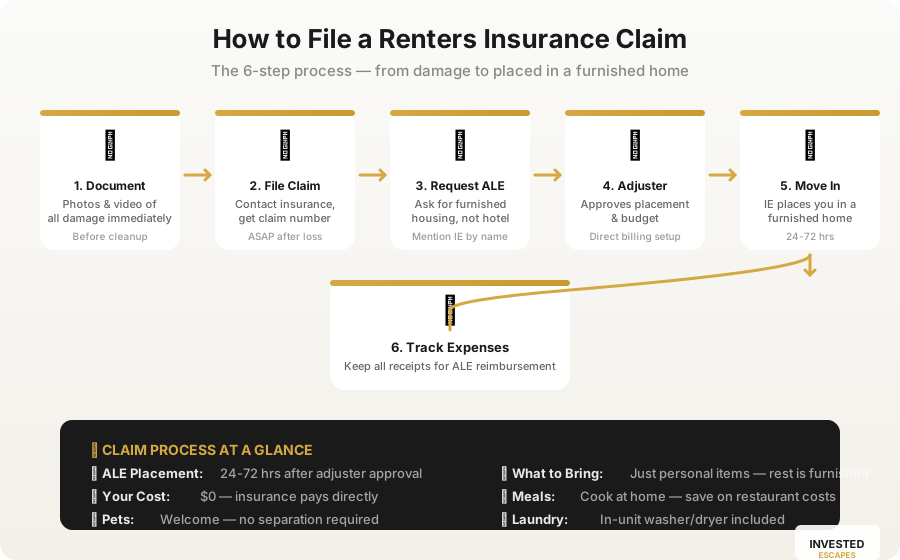
How to File a Renters Insurance Claim
If your rental is damaged and you need to file a claim, the process is straightforward — but knowing the steps in advance saves time and stress. Here's the step-by-step process, from documenting the damage to moving into temporary housing:
Step 1: Document the Damage 📸
Before you clean up or touch anything, take photos and video of all damage. Document every room, every damaged item, and the source of the damage (fire, water, etc.). Make a list of damaged belongings with approximate values. This documentation is your proof of loss — the more thorough you are, the smoother your claim will be.
Step 2: Contact Your Insurance Company 📞
File your claim as soon as possible — most policies require prompt reporting. Call your insurance company's claims line or file online through their portal. You'll receive a claim number and be assigned an adjuster. The adjuster will contact you to inspect the damage and confirm coverage.
Step 3: Request ALE Housing 🏠
Tell your adjuster that your rental is uninhabitable and you need ALE housing. Specifically ask for a furnished home rather than a hotel — especially if you have children, pets, or anticipate being displaced for more than two weeks. Mention Invested Escapes as your preferred temporary housing provider. Your adjuster can authorize direct billing so you don't front the money.
Step 4: Work with Your Adjuster 🤝
Your adjuster will inspect the damage, confirm what's covered, and authorize your claim. Provide all documentation (photos, video, inventory of damaged items). Keep all receipts for any expenses related to your displacement — meals, lodging, mileage, moving costs. Submit receipts to your adjuster regularly rather than saving them all for the end.
Step 5: Move into Temporary Housing 🧳
Once your adjuster authorizes ALE housing, Invested Escapes can place you in a fully furnished home within 24-72 hours. You'll arrive to a home with a full kitchen, private bedrooms, in-unit laundry, WiFi, smart TVs, and all the amenities of a real home — not a hotel room. Just bring your personal belongings.
Step 6: Track Expenses 📊
Throughout your stay in temporary housing, keep every receipt — groceries, laundry, mileage, moving costs, any expense that's above what you'd normally spend. Submit these to your adjuster for ALE reimbursement. Most adjusters prefer weekly submissions rather than a large batch at the end.
Important: Most renters don't know they can request a FURNISHED HOME instead of a hotel through their ALE coverage. Hotels work for a few nights, but for weeks or months, a furnished home is better for your family AND often less expensive for the insurance company. Always ask for furnished housing — and request Invested Escapes by name.
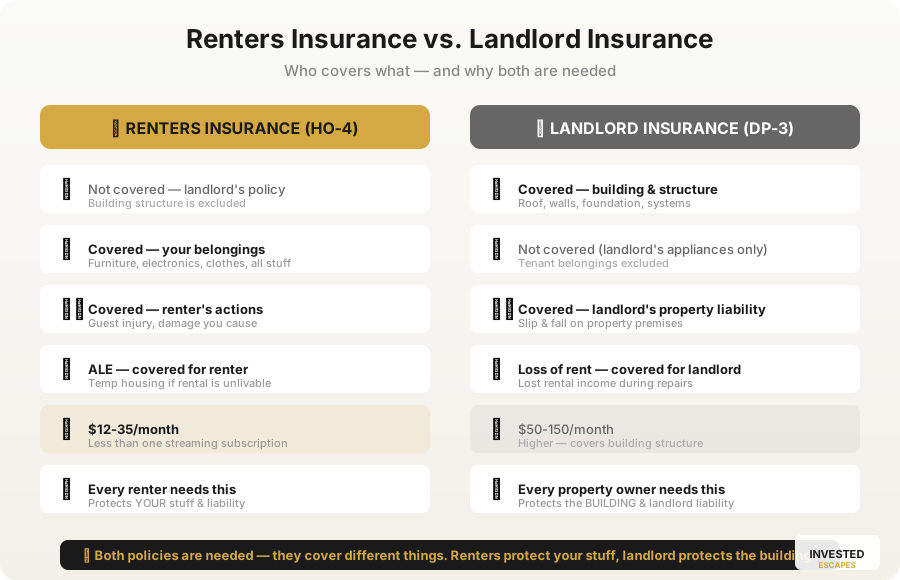
Renters Insurance vs. Landlord Insurance — What's the Difference?
One of the most common misconceptions is that a landlord's insurance covers the renter's belongings. It doesn't. Landlord insurance (typically a DP-3 policy) covers the building structure and the landlord's liability — but NOT the renter's personal property, and NOT the renter's personal liability. Both policies are needed, and they cover completely different things:
| Feature | Renters Insurance (HO-4) | Landlord Insurance (DP-3) |
|---|---|---|
| 🏠 Structure | Not covered | Covered — building & roof |
| 📦 Personal property | Covered — your belongings | Not covered (landlord's appliances only) |
| 🛡️ Liability | Covered (renter's actions) | Covered (landlord's property liability) |
| 🏠 ALE/loss of use | Covered for renter | Covered for landlord (lost rent) |
| 💰 💰 Monthly cost | $12-35/mo | $50-150/mo |
| 👤 Who needs it | Every renter | Every property owner |
Common Renters Insurance Myths
"My landlord's insurance covers my stuff" ❌
False. Your landlord's insurance covers the building structure — the roof, walls, plumbing, electrical systems. It does NOT cover your personal belongings. If a fire destroys your apartment, your landlord's insurance pays to rebuild the building. Your renters insurance pays to replace your furniture, electronics, clothes, and everything else you own. Without renters insurance, you'd have to replace everything out of pocket.
"Renters insurance is expensive" ❌
False. The average cost of renters insurance is $15-25 per month — less than a Netflix, Hulu, or Spotify subscription. For that price, you get $30,000+ in personal property coverage, $300,000 in liability coverage, and ALE coverage that pays for temporary housing if you're displaced. It's one of the best values in insurance.
"I don't have enough stuff to insure" ❌
False. Add up your clothes, electronics, furniture, kitchen items, shoes, books, and sports equipment. Most renters have $20,000+ in belongings — far more than they realize. A simple inventory walk-through of your apartment will quickly show how much your stuff is actually worth.
"ALE only covers hotels" ❌
False. ALE covers furnished homes — which are often better AND cheaper than hotels for stays over 2 weeks. A furnished home gives you a full kitchen, private bedrooms, in-unit laundry, a yard, and a real neighborhood. Hotels give you a single room with a kitchenette. If you're displaced for weeks or months, always request furnished housing through your ALE coverage.
How Invested Escapes Works with Your Renters Insurance
If you're displaced from your rental and your ALE coverage is active, Invested Escapes works directly with your insurance adjuster to place you in a furnished home — fast. Here's how the coordination works:
- 🤝 Direct adjuster coordination: We work directly with your insurance adjuster on placement, budget approval, and billing — you don't have to manage the back-and-forth
- 🏠 Furnished homes, not hotels: We place you in a real home with a full kitchen, private bedrooms, in-unit laundry, and residential neighborhood — not a hotel room
- 🐕 Pet-friendly: Most of our properties welcome pets — no separation from your dog or cat during a stressful displacement
- ⚡ 24-72 hour placement: We can match and place you within 24-72 hours of your adjuster's approval — no weeks of waiting
- 📺 Smart TVs & workspaces: Log into your own Netflix/Hulu profiles, dedicated desk for remote work — the amenities of home
- 🌳 Backyard, grill, garage: Real home amenities that hotels simply can't offer — outdoor space for kids and pets, grill for cooking, secure parking
- 💳 Direct insurance billing: We bill your insurance company directly — you don't front the money or wait for reimbursement
If you've been displaced from your rental, contact your insurance adjuster and request Invested Escapes as your temporary housing provider. We'll coordinate directly with your insurance company to get you into a furnished home — often within 24-72 hours of approval.
Displaced from Your Rental?
If your rental is uninhabitable and you have renters insurance, tell us about your situation. We'll coordinate with your adjuster to place you in a furnished home — often within 24-72 hours.
Frequently Asked Questions
What does renters insurance cover?
Renters insurance covers three main areas: (1) Personal property — your furniture, electronics, clothing, and other belongings if they're damaged, destroyed, or stolen; (2) Liability — if a guest is injured in your rental or you cause damage to a neighbor's property; and (3) Additional Living Expenses (ALE) — temporary housing and extra living costs if your rental becomes uninhabitable due to a covered loss like fire or water damage.
How much does renters insurance cost per month?
The national average for renters insurance is $15-25 per month for a standard policy with $30,000 in personal property coverage, $300,000 in liability, and $6,000 in ALE. Basic policies start around $12/month, while high-value policies with $75,000+ in property coverage cost $35-50/month. Your actual cost depends on your location, coverage limits, deductible, and any endorsements.
Does renters insurance pay for temporary housing?
Yes. The Additional Living Expenses (ALE) component of your renters insurance policy pays for temporary housing if your rental becomes uninhabitable due to a covered peril (fire, water damage, smoke damage, etc.). ALE covers furnished homes, hotels, additional food costs, laundry, pet boarding, storage, and increased commuting costs. You can request a furnished home instead of a hotel — which is usually better for families and often less expensive for the insurance company.
What is ALE coverage in renters insurance?
ALE (Additional Living Expenses) is a standard component of renters insurance that pays the additional costs of living away from home when your rental is uninhabitable due to a covered loss. ALE covers temporary housing (furnished home or hotel), additional food costs above your normal spending, laundry expenses, pet boarding, storage for your belongings, increased commuting costs, and moving costs. ALE is typically capped at 20-30% of your personal property coverage limit.
Can I choose a furnished home instead of a hotel through my renters insurance?
Yes. Through your ALE coverage, you can request a furnished home instead of a hotel — especially if you have children, pets, or anticipate being displaced for more than two weeks. Insurance companies are generally receptive because furnished homes are often less expensive than hotels on a monthly basis. Ask your adjuster to work with a temporary housing provider like Invested Escapes, who can place you in a fully furnished home within 24-72 hours and bill the insurance company directly.
Need Corporate Housing?
Whether you're a property owner looking to earn income or a tenant needing a furnished home, Invested Escapes can help.