What to Do When Your Home Is Damaged: Insurance Housing Step-by-Step
A step-by-step guide on what to do when your home is damaged — from documenting the damage to filing a claim, getting placed in temporary housing, and returning home after repairs.
Invested Escapes
Temporary Housing Experts
When your home is damaged by fire, water, or a storm, the immediate aftermath is chaotic and overwhelming. You're dealing with emotional shock, worried about your family's safety, and suddenly facing the question: where are we going to live? The good news is that if you have homeowners or renters insurance, your policy likely includes Additional Living Expenses (ALE) coverage that pays for temporary housing while your home is being repaired. This guide walks you through the entire process — step by step — from the moment damage occurs to the day you move back home. For a broader overview, see our complete guide to insurance housing.
Step 1: Ensure Safety First
Before anything else, make sure your family and pets are safe. If there's active danger — fire, structural damage, gas leak, or electrical hazard — evacuate immediately and call 911. Do not re-enter the home until emergency responders confirm it's safe. Your safety is more important than any belongings or documentation.
- 🚨 Evacuate if dangerous: If there's fire, gas smell, structural damage, or standing water near electrical systems, get out immediately
- 📞 Call 911: For active emergencies — fire, gas leak, structural collapse
- 🐕 Grab pets: If you can safely reach them, take pets with you when evacuating
- 💊 Essentials only: Grab medications, IDs, and essential clothing if you have 5 minutes — leave everything else
- 🚫 Don't re-enter: Wait for emergency responders to confirm the home is safe to enter
Step 2: Document the Damage
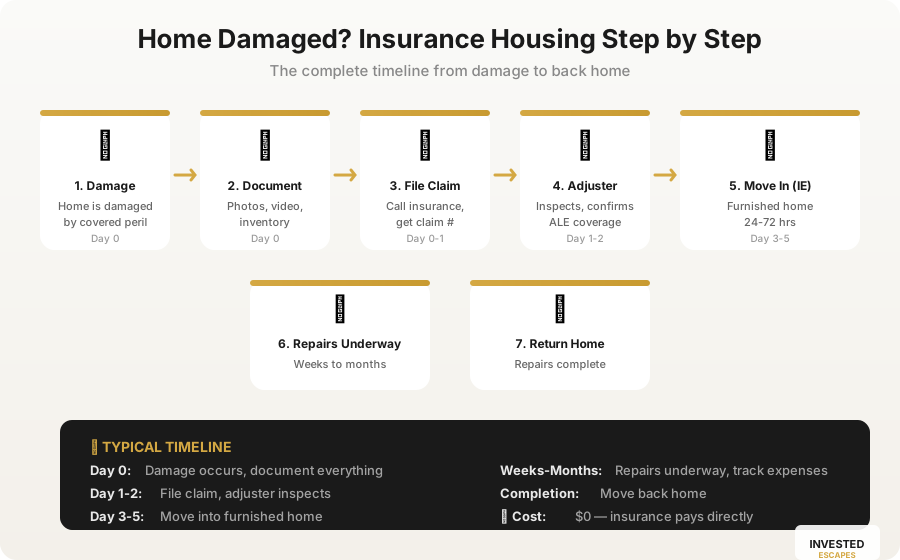
Once it's safe to re-enter, document everything before any cleanup or mitigation begins. This documentation is your proof of loss — the evidence your insurance company uses to evaluate your claim. The more thorough your documentation, the smoother and faster your claim will be.
- 📸 Photos: Take 50+ photos — wide shots of every room, close-ups of damaged items, and the source of damage
- 🎥 Video walk-through: Record video of every room, narrating what you see, the date, and the time
- 📋 Written inventory: List every damaged item with description, approximate age, and replacement value
- 🔥 Source of damage: Photograph the cause — burst pipe, fire origin, storm damage, etc.
- 🚫 Before cleanup: Take all photos and video BEFORE any cleanup, water extraction, or debris removal
Do NOT throw away damaged items or start cleanup before your adjuster inspects them. If emergency mitigation is needed (water extraction, tarping a roof), document thoroughly first and keep all damaged items. Your adjuster needs to see the damage in person.
Step 3: Contact Your Insurance Company
File your claim as soon as safely possible — most policies require prompt reporting. Call your insurance company's claims line or file online. You'll receive a claim number immediately and an adjuster will be assigned to contact you within 24-48 hours. Clearly state that your home is uninhabitable and you need ALE housing.
Step 4: Meet with Your Adjuster
Your adjuster will visit your home within 24-48 hours to inspect the damage. Walk through every room together and point out all damage. Share your photos, video, and inventory. The adjuster will confirm whether the damage is from a covered peril and authorize ALE coverage if your home is uninhabitable.
- 🤝 Walk through together: Don't assume the adjuster will find everything — show them all damage
- 📸 Share documentation: Send all photos, video, and inventory to the adjuster
- ❓ Ask about ALE: Confirm your home is uninhabitable and ALE coverage is approved
- 💰 Ask your ALE limit: How much do you have? Is there a time cap (12-24 months)?
- 💳 Ask about direct billing: Can they arrange direct billing with a temporary housing provider?
Step 5: Request a Furnished Home — Not a Hotel
This is the most critical step. Your adjuster may default to booking you into a hotel — but you can and should request a furnished home instead, especially if you have children, pets, or anticipate being displaced for more than two weeks. Here's exactly what to say:
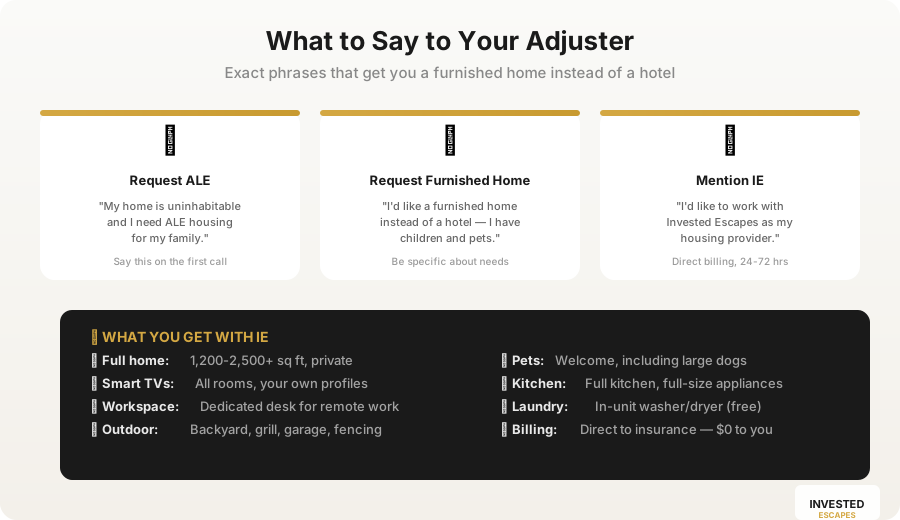
- 💬 "My home is uninhabitable and I need ALE housing for my family."
- 🏠 "I'd like a furnished home instead of a hotel — I have children and pets and need a full kitchen, private bedrooms, and a yard."
- 🏢 "I'd like to work with Invested Escapes as my temporary housing provider — they can coordinate with you on placement and direct billing."
- 📋 Provide your needs: Number of bedrooms, location preferences (school district, commute), pet requirements, accessibility needs, and estimated length of stay
Sometimes multiple temporary housing providers may be involved in your placement. Some providers work interchangeably as relocation companies, and two may collaborate to find the best option. This is standard and best practice — don't be confused if more than one company contacts you. Invested Escapes has its own managed inventory AND can coordinate with other relocation companies.
Step 6: Move Into Your Furnished Home
Invested Escapes can place you in a fully furnished home within 24-72 hours of your adjuster's approval. You'll arrive to a home with everything set up — just bring your personal belongings.
- 🏠 Full furnished home: Full kitchen, private bedrooms, in-unit laundry, WiFi
- 📺 Smart TVs: In living area and bedrooms — log into your own Netflix, Hulu, Disney+ profiles
- 💻 Dedicated workspace: Desk and ergonomic chair for remote work
- 🌳 Backyard: Private outdoor space for kids and pets — critical for mental health during displacement
- 🔥 Grill: Gas or charcoal grill for outdoor cooking
- 🚗 Garage: Garage or dedicated parking for your vehicle and storage
- 🔒 Fencing: Fenced yard for privacy and pet safety — let your dog out without a leash
- 🐕 Pet-friendly: Most properties welcome pets, including large dogs — no separation
- 💳 Direct insurance billing: We bill your insurance company directly — you don't front the money
Step 7: Track Expenses and Communicate
Throughout your stay in temporary housing, keep every receipt for expenses related to your displacement. ALE covers the additional costs of living away from home — food, laundry, commuting, storage, and moving. Submit receipts to your adjuster weekly and stay in regular communication about your repair timeline.
- 🍽 Food receipts: Track additional grocery and restaurant costs above your normal spending
- 🧺 Laundry receipts: If no in-unit laundry (most IE homes have it)
- 🚗 Mileage log: Track extra miles commuting from your temporary location
- 📦 Storage receipts: For belongings removed from your damaged home
- 🚚 Moving receipts: Costs of moving belongings to temporary housing
- 📊 Submit weekly: Send receipts to your adjuster every week — don't save them for the end
- 💬 Check in weekly: Ask your adjuster for repair timeline updates and communicate any changes
How Long Will You Be in Temporary Housing?
The duration of your displacement depends on the type and severity of damage. Here's what to expect for common scenarios:
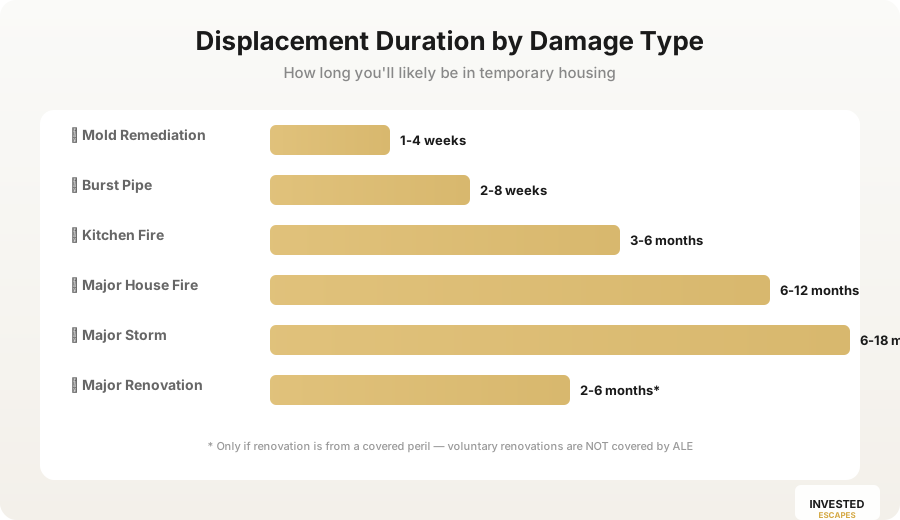
| Damage Type | Typical Duration | ALE Needed (at $3K-6K/mo) |
|---|---|---|
| 🦠 Mold remediation | 1-4 weeks | $750-$6,000 |
| 💧 Burst pipe / water | 2-8 weeks | $1,500-$12,000 |
| 🍳 🔥 Kitchen fire | 3-6 months | $9,000-$36,000 |
| 🔥 Major house fire | 6-12 months | $18,000-$72,000 |
| 🌪 Major storm damage | 6-18 months | $18,000-$108,000 |
| 🔧 Renovation (covered peril only) | 2-6 months | $6,000-$36,000 |
Important: ALE only covers temporary housing during renovations if the renovations are necessary due to a covered peril (fire, water damage, storm). If you're voluntarily renovating your home — upgrading a kitchen, for example — ALE does not apply. Voluntary renovations are not covered by insurance.
What If Repairs Take Longer Than Expected?
Home repairs frequently take longer than initial estimates — especially after widespread disasters when contractor availability is limited. If your repairs are delayed, contact your adjuster and Invested Escapes at least 2 weeks before your current housing period ends to arrange an extension. In most cases, you can stay in the same furnished home for the extended period — no need to move again.
- 📅 Contact early: Reach out 2 weeks before your housing period ends
- 📋 Updated timeline: Get a revised repair estimate from your contractor
- ✅ Adjuster approves: Your adjuster confirms the extension and updates direct billing
- 🏠 Stay in place: Usually you can stay in the same home — no need to move
- 💰 Check ALE balance: Make sure you have enough remaining ALE budget
Step 8: Return Home
Once repairs are complete and your home is habitable — meaning it has working plumbing, electricity, safe structural integrity, and passes any required inspections — you move out of temporary housing and return home. ALE coverage ends when your home is repaired or when your ALE limit is reached, whichever comes first. Invested Escapes coordinates your move-out and handles property restoration.
If your home has been damaged and you need temporary housing, contact your insurance company immediately and request Invested Escapes as your temporary housing provider. We'll coordinate with your adjuster to get you into a furnished home — often within 24-72 hours of approval. Don't settle for a hotel room when you're entitled to a furnished home.
For more help, see our complete renters insurance guide and our insurance housing guide. For a full overview, see our temporary housing guide.
Home Damaged? We Can Help.
If your home is uninhabitable and you have insurance, tell us about your situation. We'll coordinate with your adjuster to place you in a furnished home — often within 24-72 hours.
Frequently Asked Questions
What should I do immediately after my home is damaged?
First, ensure your family's safety — evacuate if there's fire, gas, structural damage, or electrical hazards, and call 911. Once safe to re-enter, document all damage with photos and video before any cleanup. Then contact your insurance company to file a claim and request ALE housing. Mention Invested Escapes as your preferred temporary housing provider — we can place you in a furnished home within 24-72 hours of your adjuster's approval.
Does insurance cover temporary housing during home renovation?
Only if the renovation is necessary due to a covered peril — like repairing fire, water, or storm damage. If you're voluntarily renovating (upgrading a kitchen, remodeling a bathroom), ALE does not cover temporary housing. ALE only applies when the damage is from a covered loss that makes your home uninhabitable, not from voluntary improvements or routine maintenance.
How long does temporary housing last after home damage?
It depends on the damage type: mold remediation typically requires 1-4 weeks, burst pipe damage 2-8 weeks, kitchen fire 3-6 months, major house fire 6-12 months, and major storm damage 6-18 months. ALE coverage lasts until your home is repaired and habitable, or until you reach your ALE dollar limit or time cap (typically 12-24 months) — whichever comes first.
Can I request a furnished home instead of a hotel after home damage?
Yes. Tell your adjuster you'd like a furnished home instead of a hotel — especially if you have children, pets, or expect to be displaced for more than two weeks. Mention Invested Escapes as your preferred provider. We coordinate with adjusters on placement, budget approval, and direct billing. You can be placed in a fully furnished home within 24-72 hours of approval.
What if my home repairs take longer than the initial estimate?
Contact your adjuster and Invested Escapes at least 2 weeks before your current housing period ends. Get an updated repair timeline from your contractor, and your adjuster will approve an extension. In most cases, you can stay in the same furnished home for the extended period — no need to move again. Make sure you have enough ALE budget remaining to cover the extension.
What should I document after home damage for my insurance claim?
Take 50+ photos of every room, close-ups of all damage, and the source of the damage (fire origin, burst pipe, etc.). Record a video walk-through narrating what you see, the date, and time. Create a written inventory of every damaged item with description, approximate age, and replacement value. Do all of this BEFORE any cleanup or mitigation begins — your adjuster needs to see the damage as it was.
Need Corporate Housing?
Whether you're a property owner looking to earn income or a tenant needing a furnished home, Invested Escapes can help.