How ALE Insurance Works: Additional Living Expenses Explained
A complete guide to how ALE (Additional Living Expenses) insurance works — what it covers, how to file a claim, what your limits are, and how to get placed in a furnished home after a displacement.
Invested Escapes
Temporary Housing Experts
When a fire, flood, or other disaster damages your home, the immediate question is: where will my family live while repairs are underway? That's where Additional Living Expenses (ALE) insurance comes in. ALE is a standard component of most homeowners, renters, and condo insurance policies that pays for the extra costs of living away from home when your residence becomes uninhabitable due to a covered loss. Despite being included in nearly every policy, most policyholders don't understand how ALE works, what it covers, or how to actually access it when they need it. This guide explains everything — from the moment a loss occurs to the day you move back home.
What Is ALE Insurance?
Additional Living Expenses (ALE) — sometimes called Loss of Use coverage — is the part of your insurance policy that pays for the additional costs of maintaining your normal standard of living when you can't live in your home due to a covered loss. On a standard HO-3 homeowners policy, ALE is Coverage D. On a renters policy (HO-4), it's included as part of the standard coverage package. On a condo policy (HO-6), ALE is typically included as well.
The key word is additional. ALE doesn't pay for all your living expenses — it pays for the extra expenses above what you would normally spend. If your normal grocery budget is $600/month and you spend $900/month while displaced, ALE pays the $300 difference — not the full $900. If your normal rent is $1,800/month and temporary housing costs $2,400/month, ALE pays the $600 difference. Some policies, however, pay for the full cost of temporary housing when direct billing is arranged — check with your adjuster.
Key takeaway: ALE covers the ADDITIONAL costs of living away from home — not all your living expenses. It pays the difference between what you'd normally spend and what you're spending while displaced. Your insurance company may arrange direct billing with a temporary housing provider so you don't front the money.
How the ALE Process Works — Step by Step
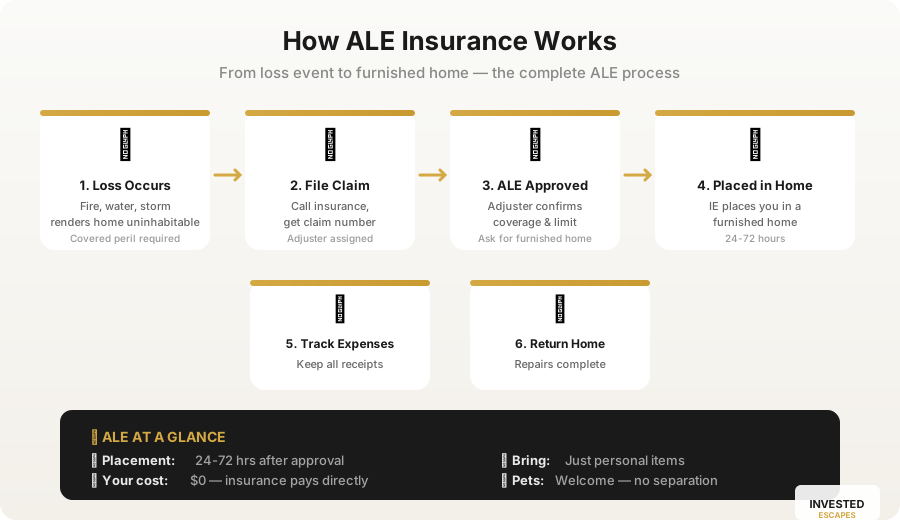
Step 1: The Loss Occurs 🔥
A covered peril — fire, water damage from a burst pipe, windstorm, smoke damage, or other covered event — renders your home uninhabitable. "Uninhabitable" means the home is not safe or functional to live in: no working plumbing, structural damage, fire damage, unsafe air quality, or no electricity. Your adjuster will confirm whether the damage qualifies for ALE.
Step 2: File Your Claim 📞
Contact your insurance company's claims line as soon as safely possible. File the claim, get your claim number, and tell the representative that your home is uninhabitable and you need ALE housing. You'll be assigned an adjuster who will contact you within 24-48 hours to inspect the damage and confirm coverage.
Step 3: ALE Coverage Is Approved ✅
Your adjuster inspects the damage and confirms it's a covered loss. They'll authorize ALE coverage and tell you your ALE limit — the maximum amount your policy will pay for additional living expenses. Ask for details: Is there a time limit (typically 12-24 months)? Are there sub-limits for specific categories like food or pet boarding? Can they arrange direct billing with a temporary housing provider so you don't front the money?
Step 4: Temporary Housing Is Arranged 🏠
This is the critical step. Your adjuster may default to booking you into a hotel — but you can request a furnished home instead, especially if you have children, pets, or anticipate being displaced for more than two weeks. Mention Invested Escapes as your preferred temporary housing provider. We work directly with your adjuster on placement, budget approval, and direct billing. You can be placed in a fully furnished home within 24-72 hours of approval.
Step 5: Track All Expenses 📊
Throughout your stay, keep every receipt — groceries, laundry, mileage, moving costs, any expense related to your displacement. Submit receipts to your adjuster weekly rather than saving them for the end. Most adjusters prefer regular submissions, and it helps you track your remaining ALE balance. For tips on the full claim process, see our step-by-step ALE claim guide.
Step 6: Return Home 🏡
Once repairs on your home are complete and the home is habitable, you move out of temporary housing and return home. ALE coverage ends when your home is repaired or when your ALE limit is reached — whichever comes first. If repairs take longer than expected (very common), contact your housing provider and adjuster to arrange an extension.
Important: ALE coverage has limits. Most policies cap ALE at 20-30% of your dwelling coverage limit (homeowners) or personal property limit (renters). Some policies also impose a time limit of 12-24 months. Track your spending carefully and stay in communication with your adjuster about your remaining balance.
What Does ALE Cover?
ALE covers the additional costs of maintaining your normal standard of living while displaced. Here's what's typically covered — and what's not:
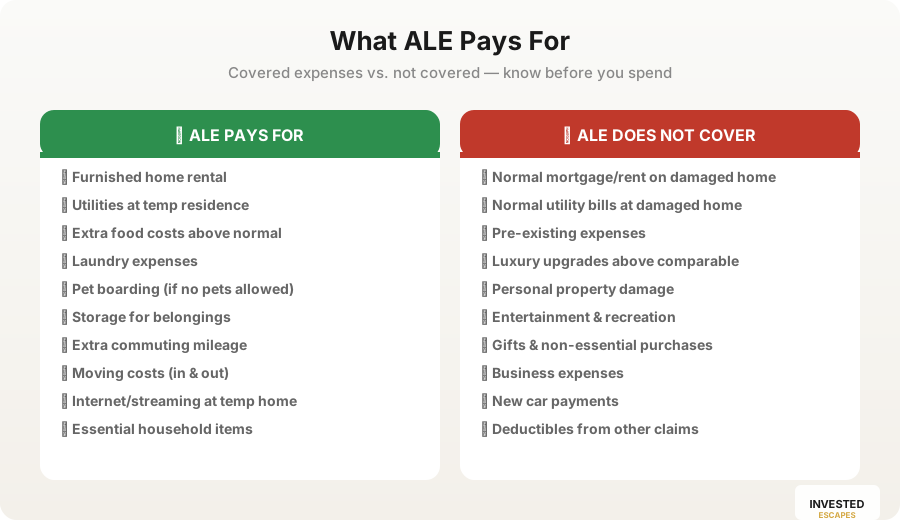
Covered Under ALE ✅
- 🏠 Temporary housing: Furnished home rental, hotel, or extended-stay property
- ⚡ Utilities: Electricity, water, gas, internet at the temporary residence (if not included in rent)
- 🍽 Additional food costs: Extra meal costs above your normal grocery spending
- 🧺 Laundry expenses: If no in-unit laundry is available at your temporary location
- 🐕 Pet boarding: If your temporary housing doesn't accept pets — request a pet-friendly furnished home instead
- 📦 Storage costs: For personal belongings removed from the damaged home
- 🚗 Increased commuting costs: Extra mileage to work or school from your temporary location
- 🚚 Moving costs: Moving belongings into temporary housing and back home
- 📺 Internet and streaming: If not included in the temporary housing rate
- 🔧 Essential household items: Basic supplies you need to set up temporary living
NOT Covered Under ALE ❌
- 🏠 Normal mortgage or rent: You continue paying your normal housing payment on the damaged home
- ⚡ Normal utility bills: Basic service fees at your damaged home continue regardless
- 💸 Pre-existing expenses: Anything you were already paying before the loss
- 🔒 Luxury upgrades: Insurance covers comparable living, not upgrades to a better standard
- 📦 Personal property damage: Covered under Contents coverage, not ALE
- 🎭 Entertainment and recreation: Non-essential leisure activities are not covered
- 💼 Business expenses: Work-related costs are separate from ALE
Every policy is different. Read your policy's ALE section carefully and ask your adjuster to clarify what's covered before committing to expenses. Some policies have sub-limits for specific categories (e.g., max $500/month for food overage).
ALE Coverage Limits by Policy Type
Your ALE limit depends on what type of insurance policy you have and how much coverage you carry. Here's how ALE limits typically break down across the three most common policy types:
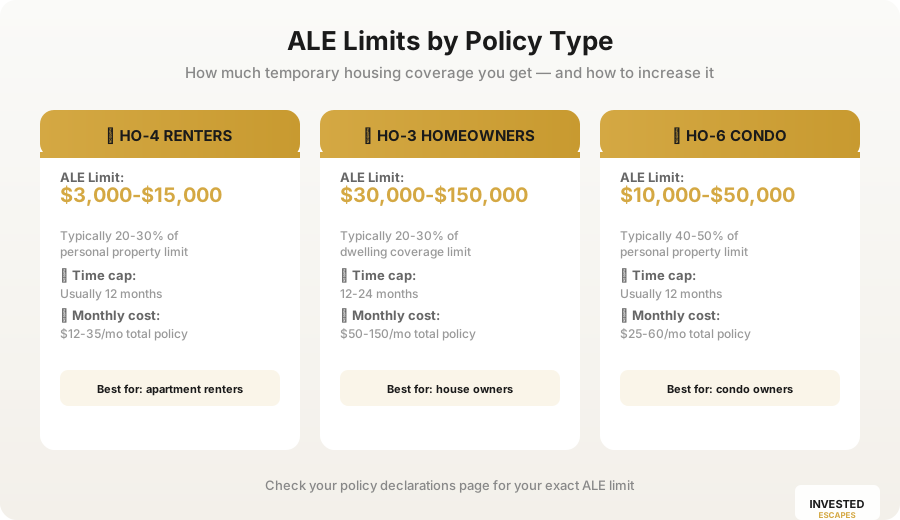
| Policy Type | ALE Typical Range | How It's Calculated | Time Cap |
|---|---|---|---|
| 🏠 HO-4 Renters | $3,000-$15,000 | 20-30% of personal property limit | 12 months |
| 🏡 HO-3 Homeowners | $30,000-$150,000 | 20-30% of dwelling coverage limit | 12-24 months |
| 🏢 HO-6 Condo | $10,000-$50,000 | 40-50% of personal property limit | 12 months |
To find your exact ALE limit, check your policy's declarations page — it will list Coverage D (or ALE) as a dollar amount or as a percentage of your dwelling/property coverage. If your ALE limit seems low, contact your insurance agent about increasing it. The cost to increase ALE is typically minimal — a few dollars per month for significantly more coverage.
Hotels vs. Furnished Homes: Why It Matters
After a displacement, many insurance companies default to placing families in hotels or extended-stay properties. While hotels work for the first few nights, they quickly become untenable for families facing weeks or months of displacement. A furnished home is almost always the better choice — and it's often less expensive for the insurance company too.
| Feature | Furnished Home (IE) | Extended Stay Hotel |
|---|---|---|
| 🏠 📐 Space | 1,200-2,500+ sq ft | 400-600 sq ft |
| 🍳 🍳 Kitchen | Full kitchen, full-size appliances | Kitchenette, mini-fridge |
| 🛏 🛏 Bedrooms | Private bedrooms for each family member | One room, maybe a pull-out sofa |
| 🧺 🧺 Laundry | In-unit washer/dryer (free) | Shared laundry room (paid) |
| 🐕 🐕 Pets | Pet-friendly, including large dogs | Limited or not allowed; daily pet fees |
| 🌳 🌳 Backyard | Private yard for kids and pets | No outdoor space |
| 🔥 Grill | Gas or charcoal grill for outdoor cooking | No cooking facilities |
| 🚗 🚗 Garage | Garage or dedicated parking | Hotel parking lot |
| 🔒 🔒 Fencing | Fenced yard for privacy and pet safety | No fencing |
| 📺 📺 Smart TV | Smart TVs — log into your own profiles | Basic hotel cable |
| 🏠 💻 Workspace | Dedicated desk for remote work | Small desk or none |
| 💰 💰 Monthly cost | $3,000-$6,000/month (all-inclusive) | $3,600-$5,400/month ($120-$180/night) |
A furnished home is often less expensive for the insurance company than a hotel after the first two weeks. Monthly furnished housing rates run $3,000-$6,000/month, while extended-stay hotels at $120-$180/night cost $3,600-$5,400/month — with a fraction of the space and none of the home amenities.
How to Request a Furnished Home Through ALE
When your adjuster authorizes ALE coverage, they may suggest a hotel. You have the right to request comparable housing — meaning a furnished home that's similar in size and quality to your damaged home. Here's how to make the request:
- 💬 Tell your adjuster: "I'd like to request furnished housing instead of a hotel — especially since I have children/pets and expect to be displaced for several weeks"
- 🏠 Mention Invested Escapes: "I'd like to work with Invested Escapes as my temporary housing provider — they can coordinate directly with you on placement and billing"
- 📋 Provide your needs: Number of bedrooms, location preferences (school district, commute distance), pet requirements, accessibility needs, and estimated length of stay
- ⚡ Fast placement: Invested Escapes can place you within 24-72 hours of your adjuster's approval — much faster than most providers
- 💳 Direct billing: We bill your insurance company directly — you don't front the money or wait for reimbursement
Sometimes multiple temporary housing providers may be involved in your placement. Some providers work interchangeably as relocation companies, and two may collaborate to find the best option for your needs. This is standard and best practice — don't be confused if more than one company contacts you. Invested Escapes has its own managed inventory AND can coordinate with other relocation companies. The focus is on finding the RIGHT property for your family.
Common ALE Scenarios and Timelines
Kitchen Fire — 3 to 6 Months
Even a localized kitchen fire can cause extensive smoke and water damage throughout the home. Repairs typically involve drywall replacement, flooring, electrical work, and smoke remediation. Typical displacement: 3-6 months. ALE needed: $9,000-$36,000 (at $3,000-$6,000/month for a furnished home).
Burst Pipe Water Damage — 2 to 8 Weeks
A burst pipe can flood multiple rooms, damaging flooring, walls, and belongings. After water extraction, drying, and mold prevention, repairs can begin. Typical displacement: 2-8 weeks. ALE needed: $1,500-$12,000.
Mold Remediation — 1 to 4 Weeks
When mold is discovered, professional remediation often requires the home to be vacated — especially when HVAC systems are affected. Typical displacement: 1-4 weeks. ALE needed: $750-$6,000.
Major Storm Damage — 6 to 18 Months
Hurricane, tornado, or severe storm damage can require extensive structural repairs, roof replacement, and interior rebuilding. After major storms, contractor availability is limited, extending repair timelines. Typical displacement: 6-18 months. ALE needed: $18,000-$108,000.
How Invested Escapes Works with Your ALE Coverage
Invested Escapes is a temporary housing provider that works directly with insurance companies to place displaced families in furnished homes. Here's what we handle:
- 🔍 Sourcing and matching: Finding available furnished properties that meet your family's needs and your adjuster's budget
- 📋 Lease coordination: Signing the lease and coordinating with your insurance company for direct billing
- ⚡ Utilities and setup: Ensuring electricity, water, gas, internet, and streaming are active on move-in day
- 🛋 Furnishing and housewares: The property comes fully furnished with furniture, kitchenware, linens, and basic supplies
- 🔧 Maintenance: If something breaks, we coordinate repairs
- 🔄 Extensions: If your stay needs to be extended, we work with your adjuster to amend the arrangement
If you've been displaced and your ALE coverage is active, contact your adjuster and request Invested Escapes as your temporary housing provider. We'll coordinate with your insurance company to get you into a furnished home — often within 24-72 hours of approval.
For more help, see our complete renters insurance guide and our insurance housing guide. For a full overview, see our temporary housing guide.
Displaced from Your Home?
If your home is uninhabitable and you have ALE coverage, tell us about your situation. We'll coordinate with your adjuster to place you in a furnished home — often within 24-72 hours.
Frequently Asked Questions
What does ALE insurance cover?
ALE (Additional Living Expenses) insurance covers the additional costs of living away from home when your residence becomes uninhabitable due to a covered loss. This includes temporary housing (furnished home or hotel), additional food costs above your normal spending, laundry, pet boarding, storage for your belongings, increased commuting costs, and moving expenses. ALE pays the difference between what you'd normally spend and what you're spending while displaced.
How much ALE coverage do I have?
Your ALE limit depends on your policy type. For homeowners (HO-3), ALE is typically 20-30% of your dwelling coverage limit — often $30,000-$150,000. For renters (HO-4), ALE is 20-30% of your personal property limit — typically $3,000-$15,000. For condo owners (HO-6), ALE is usually 40-50% of your personal property limit — $10,000-$50,000. Check your policy declarations page for your exact limit.
Can I request a furnished home instead of a hotel through ALE?
Yes. Through your ALE coverage, you can request a furnished home instead of a hotel — especially if you have children, pets, or anticipate being displaced for more than two weeks. Insurance companies are generally receptive because furnished homes are often less expensive than hotels on a monthly basis. Ask your adjuster to work with a temporary housing provider like Invested Escapes, who can place you in a fully furnished home within 24-72 hours and bill the insurance company directly.
How long does ALE coverage last?
ALE coverage lasts until your home is repaired and habitable, or until you reach your ALE dollar limit — whichever comes first. Most policies also impose a time cap of 12-24 months. If repairs take longer than expected, contact your adjuster to discuss options. Track your ALE spending carefully to avoid running out of coverage before repairs are complete.
Does ALE cover food expenses?
Yes, but only the additional cost — the difference between what you'd normally spend on food and what you're spending while displaced. If your normal grocery budget is $600/month and you spend $900/month while displaced (due to eating out more or higher grocery costs at your temporary location), ALE pays the $300 difference. Keep all grocery and restaurant receipts and submit them to your adjuster weekly.
What's the difference between ALE and loss of use?
ALE (Additional Living Expenses) and Loss of Use are often used interchangeably. On a homeowners policy (HO-3), Coverage D is labeled 'Loss of Use' and includes ALE plus potential rental income coverage if you were renting out part of your home. On renters and condo policies, the coverage is typically labeled ALE. Both cover the additional costs of living away from home due to a covered loss.
Need Corporate Housing?
Whether you're a property owner looking to earn income or a tenant needing a furnished home, Invested Escapes can help.