What Does Displaced Mean in Housing? Rights and Options Explained
Complete guide to what displaced means in housing — types of displacement, your rights, ALE insurance coverage, how to get furnished temporary housing, and how Invested Escapes places displaced families fast.
Invested Escapes
Temporary Housing Experts
When insurance companies, government agencies, and housing providers use the term "displaced," they're describing a specific situation with specific rights and benefits. If you've been told you're "displaced" from your home, it means you've been forced to leave your primary residence because it's uninhabitable — and you have rights under your insurance policy, local laws, and federal programs. This guide explains exactly what "displaced" means in housing, the types of displacement, your rights, how ALE insurance coverage works, and how to get placed in a furnished home through Invested Escapes.
What Does Displaced Mean in Housing?
In housing terms, displaced means you have been forced to leave your primary residence because it has become uninhabitable due to damage, destruction, or a government order. The key elements are: (1) you didn't choose to leave — you were forced out, (2) your home is uninhabitable — not just inconvenient but actually unsafe or impossible to live in, and (3) the cause is typically a covered event — fire, water damage, storm, mold, or a government evacuation order.
Key definition: A displaced person in housing is someone who has been forced to leave their primary residence because it is uninhabitable due to damage, destruction, or a government order — and who therefore needs temporary housing while their home is repaired, rebuilt, or they find a new permanent residence.
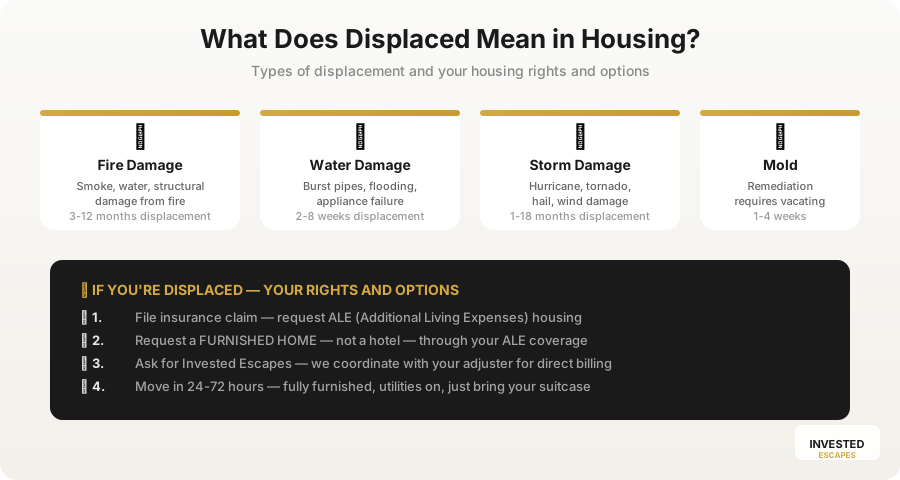
Types of Housing Displacement
Fire Damage 🔥
Fire damage is one of the most common causes of housing displacement. Even a localized kitchen fire can cause enough smoke and water damage (from firefighting efforts) to make a home uninhabitable for months. Fire displacement typically requires 3-12 months of temporary housing, depending on the extent of structural damage and the scope of repairs.
Water Damage 💧
Water damage from a burst pipe, appliance failure, roof leak, or plumbing issue can render a home uninhabitable — especially when flooring, walls, and electrical systems are affected. Mold remediation often follows water damage, requiring the home to be vacated during drying and treatment. Typical displacement: 2-8 weeks.
Storm and Natural Disaster Damage 🌪
Hurricanes, tornadoes, severe thunderstorms, hail, and winter freezes can cause catastrophic damage requiring extended displacement. After major storms, local hotel capacity is often overwhelmed by displaced residents and emergency workers — making furnished homes in nearby neighborhoods a critical resource. Typical displacement: 1-18 months, depending on severity.
Mold Remediation 🦠
When mold is discovered in a home, professional remediation often requires the occupants to vacate — especially when affected areas include HVAC systems, multiple rooms, or when family members have respiratory sensitivities. Displacement for mold remediation typically lasts 1-4 weeks, but can extend longer if structural repairs are needed.
Government-Ordered Evacuation or Condemnation 🏛
Sometimes homes are displaced by government action — a condemnation order due to unsafe conditions, an evacuation order during a natural disaster, or eminent domain. Government-ordered displacement may qualify for different assistance programs than insurance-based displacement.
Wildfire Damage 🔥
Wildfires in the western U.S. (California, Colorado, Oregon, Washington) can destroy or severely damage homes, requiring 6-18 months of temporary housing. Wildfire displacement is particularly challenging because rebuilding in fire-prone areas involves complex permitting and construction requirements.
Your Rights When You're Displaced
When you're displaced from your home, you have specific rights under your insurance policy, state law, and federal programs:
ALE Coverage Rights (Insurance) 💳
If you have homeowners or renters insurance, your policy includes Additional Living Expenses (ALE) coverage — also called Loss of Use coverage. This is your RIGHT to have your temporary housing paid for by your insurance company. Key rights:
- 🏠 Right to temporary housing: Your insurance must pay for temporary housing while your home is uninhabitable due to a covered peril
- 🏠 Right to furnished housing: You can request a furnished home — not just a hotel — especially for extended stays
- 🍽 Right to additional living expenses: ALE covers additional food costs, laundry, pet boarding, storage, and increased commuting
- 📊 Right to know your limit: Your insurer must tell you your ALE coverage limit and how much remains
- 💳 Right to direct billing: Many temporary housing providers (including IE) arrange direct billing with your adjuster — you don't front the money
Renters' Rights 🏠
If you're a renter and your rental is damaged, you have additional rights:
- 📋 Lease termination: If the rental is uninhabitable, you can typically terminate your lease without penalty
- 💰 Rent abatement: You're not required to pay rent for the period the unit is uninhabitable
- 🏠 ALE through renters insurance: Your renters insurance ALE coverage pays for temporary housing — same as homeowners
- ⚖️ Landlord responsibility: Your landlord is responsible for repairing the unit — but not for your temporary housing (that's your insurance)
Federal Disaster Assistance 🇺🇸
If the displacement is caused by a federally declared disaster (major hurricane, wildfire, flood), you may qualify for FEMA assistance in addition to insurance:
- 🏠 FEMA Transitional Sheltering Assistance: Short-term hotel lodging for displaced families
- 🏠 FEMA Individuals and Households Program (IHP): Financial assistance for temporary housing and repairs
- 📋 SBA disaster loans: Low-interest loans for rebuilding (for homeowners and renters)
- ⚠️ Important: FEMA assistance is available ONLY for federally declared disasters — not for individual house fires or localized events
How to Get Furnished Housing When You're Displaced
If you've been displaced, here's the step-by-step process to get placed in a furnished home through your ALE coverage:
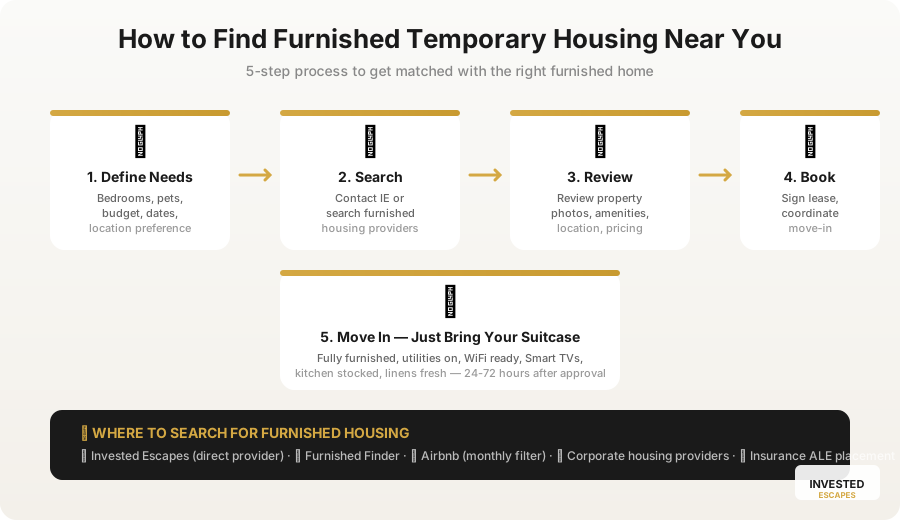
- 📞 Step 1: File your insurance claim: Contact your insurance company immediately. Tell them your home is uninhabitable and you need ALE housing. Ask for your ALE coverage limit.
- 🏠 Step 2: Request a furnished home — not a hotel: Specifically ask for a furnished home. Insurance companies often default to hotels, but furnished homes are better for families and often less expensive for the insurer on a monthly basis.
- 🤝 Step 3: Ask for Invested Escapes: Mention Invested Escapes as your preferred temporary housing provider. We work directly with your adjuster on placement, budget approval, and direct billing.
- 📋 Step 4: Provide your needs: Tell us your bedroom needs, location preferences (school district, commute), pet requirements, and estimated length of stay.
- 🧳 Step 5: Move in: Within 24-72 hours of your adjuster's approval, you move into a fully furnished home. Just bring your personal belongings.
Important: You have the RIGHT to request furnished housing — not just a hotel — through your ALE coverage. Hotels work for a few nights, but for weeks or months, a furnished home is better for your family AND often less expensive for the insurance company. Always ask for furnished housing. For more detail, see our <a href="/blog/insurance-housing-guide">complete guide to insurance housing and ALE</a>.
What's Included in Your Furnished Displacement Housing
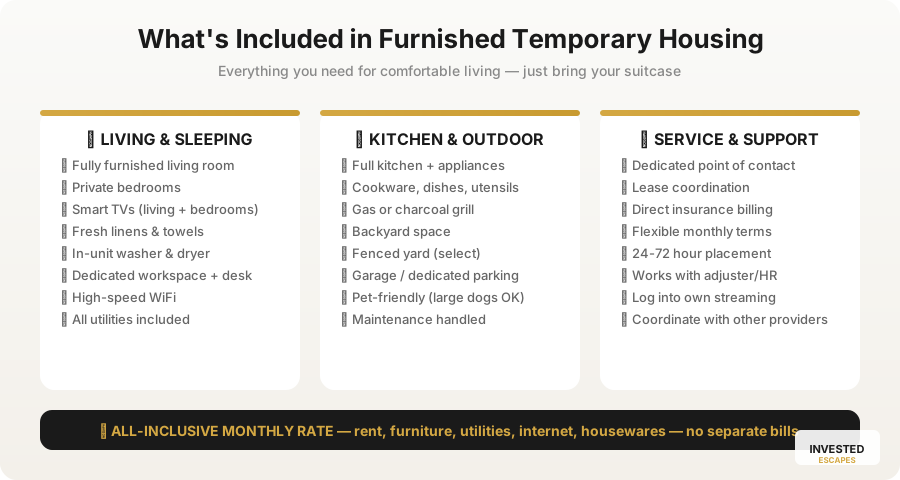
- 🛋 Fully furnished: Living room, bedrooms, dining area — quality furniture throughout
- 📺 Smart TVs: In living area and bedrooms — log into your own Netflix, Hulu, Disney+ profiles
- 🍳 Full kitchen: Stove, oven, full-size refrigerator, microwave, dishwasher, cookware, dishes, utensils
- 🧺 In-unit laundry: Washer and dryer — no laundromat or shared laundry
- 📶 WiFi & internet: High-speed internet included and active on move-in day
- ⚡ All utilities: Electricity, water, gas, trash — all included in one monthly rate
- 💻 Dedicated workspace: Desk and ergonomic chair for remote work
- 🔥 Grill: Gas or charcoal grill for outdoor cooking
- 🚗 Garage or dedicated parking: Secure parking included
- 🔒 Fencing: Fenced yards for privacy and pet safety (select properties)
- 🌳 Backyard: Outdoor space for families, pets, and relaxation
- 🛏 Linens & towels: Fresh linens, towels, and bedding provided
- 🐕 Pet-friendly: Most properties welcome pets — including large dogs (so you don't have to board them)
- 🔧 Maintenance: If something breaks, we handle repairs promptly
Hotels vs. Furnished Homes for Displaced Families
| Feature | Furnished Home (IE) | Hotel / Extended Stay |
|---|---|---|
| 🏠 📐 Space | 800-2,500+ sq ft | 200-600 sq ft |
| 🍳 🍳 Kitchen | Full kitchen + appliances | None or kitchenette |
| 🛏 🛏 Bedrooms | Private bedrooms for family | One room, shared |
| 🧺 🧺 Laundry | In-unit (free) | Shared (paid) |
| 🐕 🐕 Pets | Welcome, large dogs OK | Rarely accepted or daily fees |
| 🌳 🌳 Outdoor | Yard, grill, garage | None |
| 💰 💰 Monthly cost | $2K-$6K all-in | $3.6K-$9K+ |
| 🎓 Schools | Placed in school district | May be outside district |
| 😴 Sleep | Private bedrooms, quiet | Shared room, hallway noise |
| 🍳 Meals | Cook at home — save money | Eat out — expensive |
Sometimes multiple temporary housing providers may be involved in your placement — and that's completely normal. Some providers are interchangeably used as relocation companies. Two companies may work together with your insurance company to find the best option. Invested Escapes has its own inventory AND can coordinate with other relocation companies to ensure you get the right property — regardless of who provides it.
Common Questions About Being Displaced
How long can I stay in temporary housing after being displaced?
Your ALE coverage pays for temporary housing until your home is repaired and habitable — OR until your ALE coverage limit is reached — whichever comes first. Most policies cap ALE at 20-30% of your dwelling coverage limit, and some policies impose a time limit (typically 12-24 months). Track your remaining ALE balance carefully and communicate with your adjuster regularly.
What if my displacement lasts longer than expected?
Extended displacement is common — especially after major disasters or when contractor availability is limited. If your repairs take longer than expected, contact your housing provider and insurance adjuster to arrange an extension. Most temporary housing providers can accommodate month-to-month extensions with proper notice.
What if I don't have insurance?
If you don't have insurance and you're displaced by a federally declared disaster, you may qualify for FEMA assistance. If the displacement is from an individual event (house fire, pipe burst) and you don't have insurance, you'll need to pay for temporary housing out of pocket or seek assistance from local charities, the Red Cross, or community organizations.
If you've been displaced from your home, contact your insurance adjuster and request Invested Escapes as your temporary housing provider. We'll coordinate directly with your insurance company to get you into a furnished home — often within 24-72 hours of approval. Don't settle for a hotel room when you can have a real home. See our <a href="/blog/renters-insurance-guide">renters insurance guide</a> and <a href="/blog/insurance-housing-guide">insurance housing guide</a> for more information.
For related reading, see our complete temporary housing guide, our insurance housing guide, and our renters insurance guide.
Displaced from Your Home?
If you've been displaced and have insurance ALE coverage, tell us about your situation. We'll coordinate with your adjuster to place you in a furnished home — often within 24-72 hours.
Frequently Asked Questions
What does displaced mean in housing?
In housing, displaced means you have been forced to leave your primary residence because it has become uninhabitable due to damage, destruction, or a government order. The key elements are: you didn't choose to leave (you were forced), your home is uninhabitable (not just inconvenient), and the cause is typically a covered event like fire, water damage, storm, mold, or a government evacuation order.
What rights do I have if I'm displaced from my home?
If you have homeowners or renters insurance, your ALE (Additional Living Expenses) coverage gives you the right to have temporary housing paid for by your insurance company. You can request a furnished home — not just a hotel. ALE also covers additional food costs, laundry, pet boarding, storage, and increased commuting. If you're a renter, you can also terminate your lease without penalty and stop paying rent for the uninhabitable period.
Does insurance pay for temporary housing when you're displaced?
Yes. Your homeowners or renters insurance ALE (Additional Living Expenses) coverage pays for temporary housing when you're displaced by a covered peril — fire, water damage, storm, mold, or other covered events. ALE covers furnished homes (not just hotels), additional food costs, laundry, pet boarding, storage, and increased commuting. You can request a furnished home instead of a hotel.
What's the difference between being displaced and being evacuated?
Being evacuated is typically a temporary, precautionary measure — you leave your home because of an imminent threat (hurricane approaching, wildfire nearby) but your home may not be damaged. Being displaced means your home is actually uninhabitable due to damage — you can't return until it's repaired. Evacuation may lead to displacement if your home is damaged during the event.
Can I choose a furnished home instead of a hotel when I'm displaced?
Yes. Through your ALE coverage, you can request a furnished home instead of a hotel — especially if you have children, pets, or anticipate being displaced for more than two weeks. Insurance companies are generally receptive because furnished homes are often less expensive than hotels on a monthly basis. Ask your adjuster to work with a temporary housing provider like Invested Escapes.
How long does ALE coverage last when you're displaced?
ALE coverage lasts until your home is repaired and habitable — or until your ALE coverage limit is reached — whichever comes first. Most policies cap ALE at 20-30% of your dwelling coverage limit, with some policies imposing a time limit (typically 12-24 months). Track your remaining ALE balance and communicate with your adjuster about repair timelines.
Need Corporate Housing?
Whether you're a property owner looking to earn income or a tenant needing a furnished home, Invested Escapes can help.