Additional Living Expenses Coverage: What It Pays For and How Much You Get
A complete guide to what Additional Living Expenses (ALE) coverage pays for — temporary housing, food, laundry, pet boarding, storage, commuting, and moving costs — with real cost scenarios.
Invested Escapes
Temporary Housing Experts
Additional Living Expenses (ALE) coverage is one of the most valuable — and most misunderstood — parts of your insurance policy. It's the coverage that pays for temporary housing, food, and other living expenses when your home is damaged and you can't live in it. But what exactly does ALE pay for? How much do you get? And how do you make sure you don't run out of coverage before your home is repaired? This guide answers every question, with real cost scenarios and practical tips for maximizing your ALE coverage. For a deeper overview of how ALE works, see our guide to how ALE insurance works.
What Is Additional Living Expenses (ALE) Coverage?
ALE — also called Loss of Use or Coverage D on a homeowners policy — pays for the additional costs of maintaining your normal standard of living when you can't live in your home due to a covered loss. The key word is additional: ALE pays the difference between what you'd normally spend and what you're spending while displaced, not all of your living expenses.
Key rule: ALE pays the ADDITIONAL cost — the difference between your normal spending and your displaced spending. If your normal grocery budget is $600/month and you spend $900/month while displaced, ALE pays the $300 difference. Keep all receipts and track the difference.
What Does ALE Coverage Pay For?
ALE covers a wide range of expenses related to your displacement. Here's everything that's typically covered:
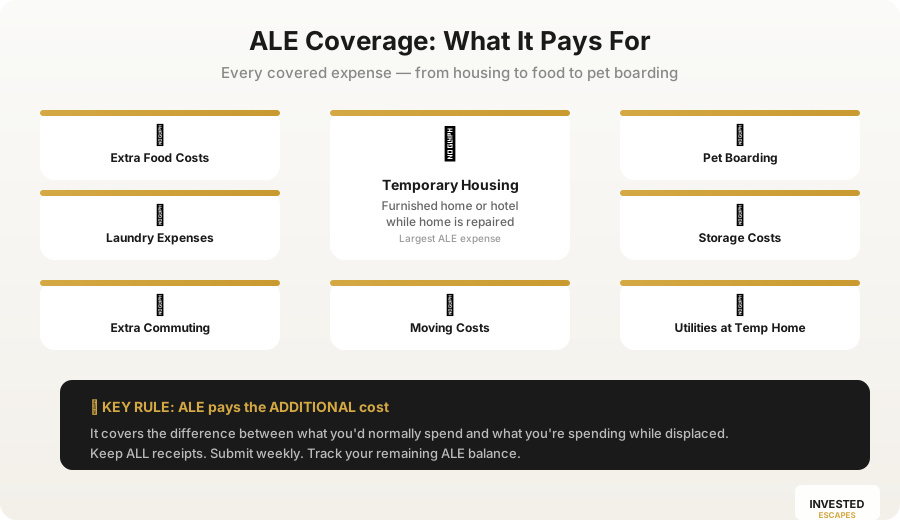
Temporary Housing 🏠
The largest ALE expense is temporary housing — your furnished home, hotel, or extended-stay property. You can request a furnished home instead of a hotel, especially for stays longer than two weeks. A furnished home through Invested Escapes includes a full kitchen, private bedrooms, in-unit laundry, smart TVs, workspace, backyard, grill, garage, and fencing — all covered by ALE.
- 🏠 Furnished home: Full house or condo with all amenities — typically $2,200-$6,000/month
- 🏨 Hotel or extended stay: For shorter stays or while waiting for furnished home placement — typically $120-$180/night
- ⚡ Utilities at temp residence: Electricity, water, gas, internet — if not included in the housing rate
- 📺 Internet and streaming: If not included in the temporary housing rate
Additional Food Costs 🍽
ALE pays the additional cost of food above what you'd normally spend. If you're cooking in your furnished home's full kitchen (which you should be), your food costs may be close to normal. If you're in a hotel without a kitchen and eating out for every meal, your additional food costs will be significant — another reason to request a furnished home.
- 🍽 Extra grocery costs: If groceries cost more at your temporary location
- 🍴 Restaurant meals: The difference between eating out and what you'd normally cook at home
- 🧾 Keep all receipts: Submit grocery and restaurant receipts to your adjuster weekly
Laundry Expenses 🧺
If your temporary housing doesn't have in-unit laundry, ALE covers laundromat or dry cleaning costs. However, most Invested Escapes furnished homes include in-unit washer and dryer at no additional cost — so this expense is typically $0.
Pet Boarding 🐕
If your temporary housing doesn't accept pets, ALE covers pet boarding costs. However, most Invested Escapes properties are pet-friendly — including large dogs — so you can avoid this expense entirely by requesting a pet-friendly furnished home. This keeps your pets with you during a stressful time AND saves on boarding costs (typically $30-$60/day per pet).
Storage Costs 📦
If you need to remove belongings from your damaged home for repair access or safety, ALE covers the cost of a storage unit. Keep receipts from the storage facility and submit them to your adjuster.
Increased Commuting Costs 🚗
If your temporary housing is farther from work or school than your damaged home, ALE covers the additional mileage. Track your miles and submit a mileage log to your adjuster — the IRS standard mileage rate is typically the benchmark used for reimbursement.
Moving Costs 🚚
ALE covers the cost of moving your belongings into temporary housing and back home when repairs are complete. This includes moving company fees, truck rental, boxes, and packing materials. Keep all moving-related receipts.
What Does ALE NOT Cover?
- 🏠 Normal mortgage or rent: You continue paying your normal housing payment on the damaged home
- ⚡ Normal utility bills: Basic service fees at your damaged home continue regardless
- 💸 Pre-existing expenses: Anything you were already paying before the loss
- 🔒 Luxury upgrades: Insurance covers comparable living, not upgrades to a better standard
- 📦 Personal property damage: Covered under Contents coverage, not ALE
- 🎭 Entertainment and recreation: Non-essential leisure activities are not covered
How Much ALE Coverage Do You Have?
Your ALE limit depends on your policy type and coverage amounts. Here's how to find your limit and what to expect:
| Policy Type | ALE Limit Range | How Calculated | Time Cap |
|---|---|---|---|
| 🏠 HO-4 Renters | $3,000-$15,000 | 20-30% of personal property limit | 12 months |
| 🏡 HO-3 Homeowners | $30,000-$150,000 | 20-30% of dwelling coverage | 12-24 months |
| 🏢 HO-6 Condo | $10,000-$50,000 | 40-50% of personal property limit | 12 months |
Check your policy declarations page for your exact ALE limit. If your ALE seems low, contact your insurance agent about increasing it — the cost to increase is typically minimal.
Real Cost Scenarios: How Much ALE You'll Use
To understand how much ALE coverage you might actually use, here are three real-world scenarios based on typical displacement situations:
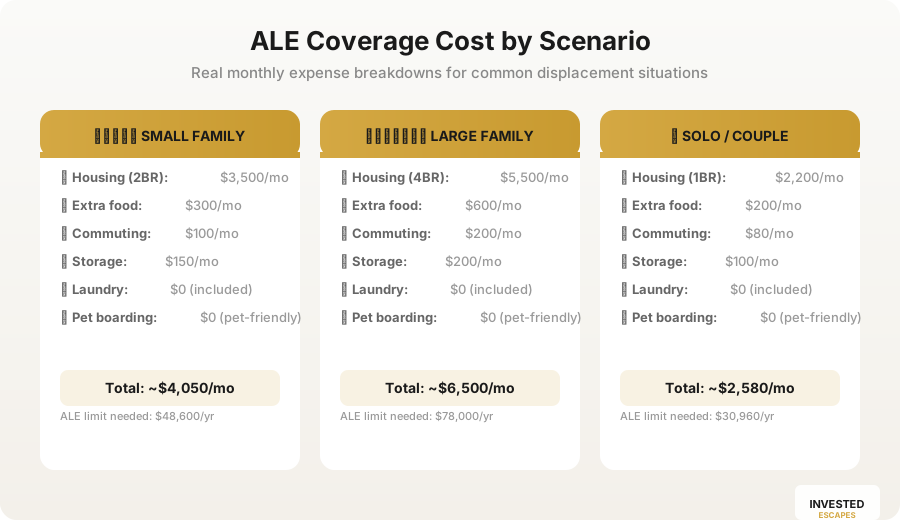
Scenario 1: Small Family (2-3 people, 2-bedroom home) — $4,050/month
- 🏠 Housing (2BR furnished home): $3,500/month
- 🍽 Extra food costs: $300/month (cooking at home, minimal restaurant meals)
- 🚗 Extra commuting: $100/month (extra mileage to work/school)
- 📦 Storage: $150/month (belongings from damaged home)
- 🧺 Laundry: $0 (in-unit washer/dryer included in IE home)
- 🐕 Pet boarding: $0 (pet-friendly furnished home)
Scenario 2: Large Family (4-5 people, 4-bedroom home) — $6,500/month
- 🏠 Housing (4BR furnished home): $5,500/month
- 🍽 Extra food costs: $600/month (larger family, more groceries)
- 🚗 Extra commuting: $200/month (multiple drivers, school drop-off)
- 📦 Storage: $200/month (more belongings to store)
- 🧺 Laundry: $0 (in-unit washer/dryer included in IE home)
- 🐕 Pet boarding: $0 (pet-friendly furnished home with fenced yard)
Scenario 3: Solo or Couple (1-bedroom) — $2,580/month
- 🏠 Housing (1BR furnished condo): $2,200/month
- 🍽 Extra food costs: $200/month (cooking at home)
- 🚗 Extra commuting: $80/month
- 📦 Storage: $100/month
- 🧺 Laundry: $0 (in-unit washer/dryer included)
- 🐕 Pet boarding: $0 (pet-friendly home)
How to Maximize Your ALE Coverage
ALE coverage is finite — once you hit your dollar limit or time cap, coverage ends. Here's how to make every dollar count:
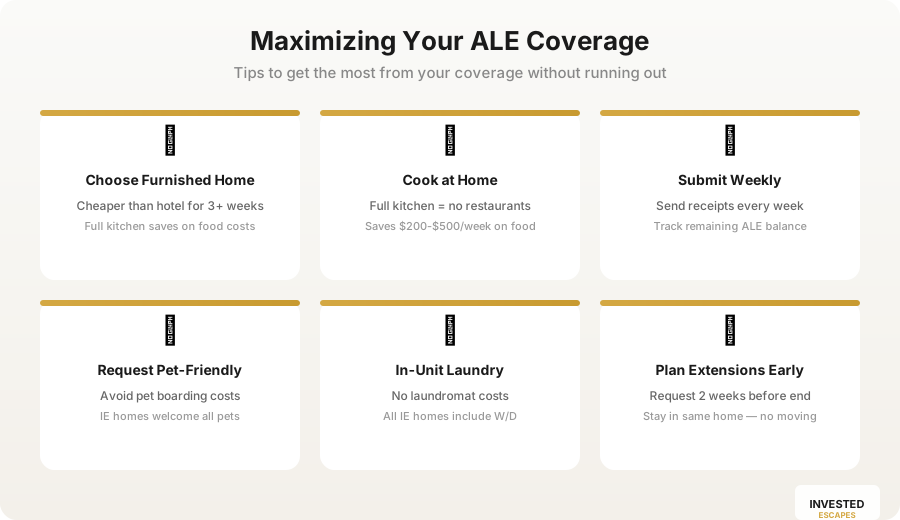
- 🏠 Choose a furnished home over a hotel: Cheaper than hotels for stays of 3+ weeks, and a full kitchen saves hundreds per week on restaurant costs
- 🍳 Cook at home: Use the full kitchen in your furnished home — cooking meals saves $200-$500/week compared to eating out
- 📊 Submit receipts weekly: Don't save them for the end — weekly submissions help you track your remaining balance and keep your claim moving
- 🐕 Request pet-friendly housing: Avoid pet boarding costs ($30-$60/day per pet) by requesting a pet-friendly furnished home
- 🧺 Use in-unit laundry: All Invested Escapes homes include in-unit washer/dryer — no laundromat costs
- 📅 Plan extensions early: If repairs are delayed, request an extension at least 2 weeks before your current housing period ends
- 📋 Track your ALE balance: Ask your adjuster for regular updates on how much ALE you've used and how much remains
If you've been displaced and your ALE coverage is active, contact your adjuster and request Invested Escapes as your temporary housing provider. Our furnished homes include full kitchens, in-unit laundry, pet-friendly options, smart TVs, workspace, backyard, grill, garage, and fencing — maximizing your comfort while minimizing your ALE spending.
For more help, see our complete renters insurance guide and our insurance housing guide. For a full overview, see our temporary housing guide.
Questions About Your ALE Coverage?
If your home is damaged and you want to understand what your ALE coverage pays for, tell us about your situation. We'll help you coordinate with your adjuster and maximize your coverage.
Frequently Asked Questions
What does additional living expenses insurance cover?
ALE covers the additional costs of living away from home when your residence is uninhabitable due to a covered loss. This includes: temporary housing (furnished home or hotel), additional food costs above your normal spending, laundry, pet boarding (if your housing doesn't accept pets), storage for your belongings, increased commuting costs, moving costs, and utilities at your temporary residence. ALE pays the difference between what you'd normally spend and what you're spending while displaced.
How much ALE coverage do I have?
For homeowners (HO-3), ALE is typically 20-30% of your dwelling coverage limit — often $30,000-$150,000. For renters (HO-4), ALE is 20-30% of your personal property limit — typically $3,000-$15,000. For condo owners (HO-6), ALE is usually 40-50% of your personal property limit — $10,000-$50,000. Most policies also have a time cap of 12-24 months. Check your policy declarations page for exact numbers.
Does ALE cover food expenses?
Yes, but only the additional cost. If your normal grocery budget is $600/month and you spend $900/month while displaced (due to eating out more or higher grocery costs at your temporary location), ALE pays the $300 difference. Cooking meals in your furnished home's full kitchen is the best way to minimize additional food costs. Keep all grocery and restaurant receipts.
How can I maximize my ALE coverage?
Choose a furnished home over a hotel (cheaper for stays of 3+ weeks), cook meals at home using the full kitchen (saves $200-$500/week), request pet-friendly housing to avoid pet boarding costs ($30-$60/day per pet), use in-unit laundry (included in IE homes), submit receipts weekly to track your balance, and request extensions early if repairs are delayed. A furnished home through Invested Escapes includes all amenities that help you minimize additional expenses.
What is the difference between ALE and Loss of Use?
ALE (Additional Living Expenses) and Loss of Use are often used interchangeably. On a homeowners policy (HO-3), Coverage D is labeled 'Loss of Use' and includes ALE plus potential rental income coverage if you were renting out part of your home. On renters and condo policies, the coverage is typically labeled ALE. Both cover the additional costs of living away from home due to a covered loss.
How much does ALE coverage cost per month while displaced?
Monthly ALE spending depends on family size and housing needs. A small family in a 2-bedroom furnished home typically uses about $4,050/month ($3,500 housing + $300 food + $100 commuting + $150 storage). A large family in a 4-bedroom home may use $6,500/month. A solo person or couple in a 1-bedroom condo typically uses about $2,580/month. Choosing a furnished home with a full kitchen and in-unit laundry helps minimize these costs.
Need Corporate Housing?
Whether you're a property owner looking to earn income or a tenant needing a furnished home, Invested Escapes can help.