Renters Insurance Additional Living Expenses: Complete Guide
A complete guide to ALE (Additional Living Expenses) in renters insurance — what it covers, how much you get, how to file a claim, and how to get a furnished home if you're displaced from your rental.
Invested Escapes
Temporary Housing Experts
If you rent your home, your renters insurance policy includes Additional Living Expenses (ALE) coverage — a protection that pays for temporary housing and extra living costs if your rental becomes uninhabitable due to a covered loss. Despite being included in nearly every renters policy, most renters don't know ALE exists, don't understand what it covers, and don't realize they can request a furnished home instead of a hotel when they're displaced. This complete guide covers everything you need to know about renters insurance ALE — what it pays for, how much you get, how to file a claim, and how Invested Escapes can place you in a furnished home within 24-72 hours of your adjuster's approval. For a broader overview, see our complete guide to what renters insurance covers.
What Is ALE in Renters Insurance?
Additional Living Expenses (ALE) is a standard component of every HO-4 renters insurance policy. It pays for the additional costs of living away from home when your rental becomes uninhabitable due to a covered peril — fire, water damage from a burst pipe, smoke damage, windstorm, or other covered events. ALE is automatically included in your renters policy — you don't need to buy it separately or add an endorsement.
The key word is additional: ALE pays the difference between what you'd normally spend and what you're spending while displaced. If your normal grocery budget is $400/month and you spend $700/month while displaced, ALE pays the $300 difference. If your temporary housing costs more than your current rent, ALE covers the difference — or, with direct billing, the insurance company pays the housing provider directly.
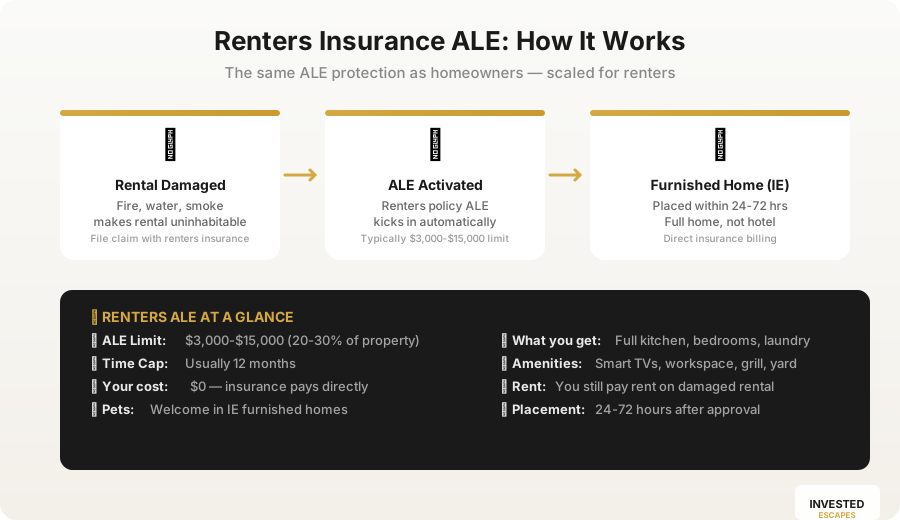
Key takeaway: Renters insurance ALE works the same way as homeowners ALE — it pays for temporary housing and additional living expenses when you're displaced by a covered loss. The main difference is the dollar limit: renters ALE is typically $3,000-$15,000 vs. homeowners ALE at $30,000-$150,000.
What Does Renters Insurance ALE Cover?
ALE in renters insurance covers the same categories as homeowners ALE — just with a lower dollar limit. Here's what's covered:
- 🏠 Temporary housing: Furnished home, hotel, or extended-stay property while your rental is repaired
- ⚡ Utilities at temp residence: Electricity, water, gas, internet — if not included in the housing rate
- 🍽 Additional food costs: Extra meal costs above your normal grocery spending
- 🧺 Laundry expenses: If no in-unit laundry at your temporary location (most IE homes include it)
- 🐕 Pet boarding: If temporary housing doesn't accept pets — request a pet-friendly furnished home to avoid this cost
- 📦 Storage costs: For belongings removed from your damaged rental
- 🚗 Increased commuting costs: Extra mileage to work or school from your temporary location
- 🚚 Moving costs: Moving belongings into temporary housing and back to your rental
- 📺 Internet and streaming: If not included in the temporary housing rate
How Much ALE Coverage Does a Renters Policy Include?
Your renters ALE limit is typically 20-30% of your personal property coverage limit. If you have $30,000 in personal property coverage, your ALE limit would be approximately $6,000-$9,000. Most policies also impose a time cap of 12 months. Check your policy declarations page for your exact ALE limit.
| Personal Property Limit | ALE Limit (20-30%) | Monthly Housing Budget | Approx. Months Covered |
|---|---|---|---|
| $15,000 | $3,000-$4,500 | $2,000-$2,500/mo | 1-2 months |
| $30,000 | $6,000-$9,000 | $2,200-$3,000/mo | 2-4 months |
| $50,000 | $10,000-$15,000 | $2,500-$3,500/mo | 3-6 months |
| $75,000+ | $15,000-$22,500+ | $3,000-$4,000/mo | 4-7 months |
If your ALE limit seems low — and for many renters, it is — contact your insurance agent about increasing it. The cost to increase ALE is typically just a few dollars per month and can make a significant difference if you're ever displaced.
Renters ALE vs. Homeowners ALE: What's Different?
ALE works the same way in both renters and homeowners policies — it covers the same categories of expenses. The differences are in the dollar limits and how they're calculated:
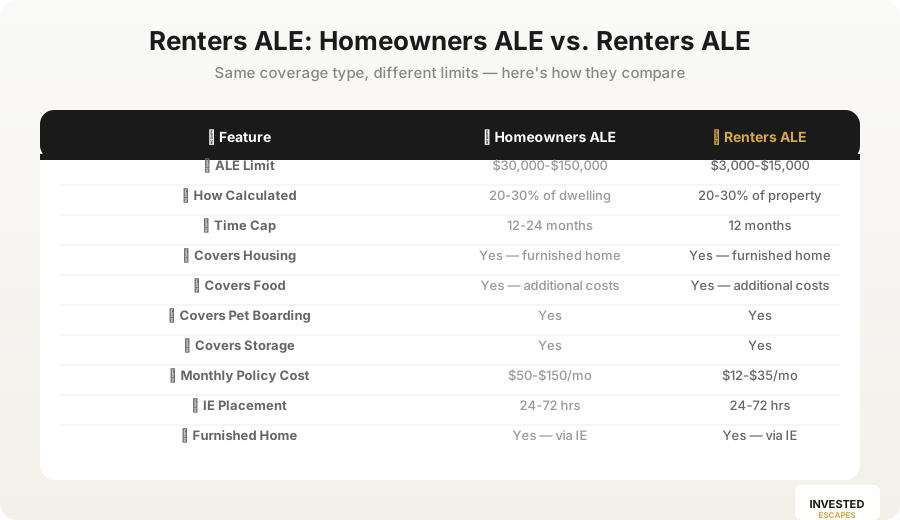
| Feature | 🏡 Homeowners ALE | 🏠 Renters ALE |
|---|---|---|
| 💰 ALE limit | $30,000-$150,000 | $3,000-$15,000 |
| 📐 How calculated | 20-30% of dwelling coverage | 20-30% of personal property |
| ⏱ Time cap | 12-24 months | 12 months |
| 🏠 Covers housing | Yes — furnished home | Yes — furnished home |
| 🍽 Covers food | Yes — additional costs | Yes — additional costs |
| 🐕 🐕 Covers pet boarding | Yes | Yes |
| 📦 Covers storage | Yes | Yes |
| 💰 💰 Policy cost | $50-$150/mo | $12-$35/mo |
| ⚡ IE placement | 24-72 hrs | 24-72 hrs |
The main difference is the dollar limit. Homeowners ALE is calculated based on dwelling coverage (the cost to rebuild the house), which is much higher than renters' personal property limits. This means renters have less ALE to work with — making it even more important to choose cost-effective furnished housing over expensive hotels.
How Much ALE Will You Actually Use?
To understand how much ALE you might use during a displacement, here are three common renter scenarios:
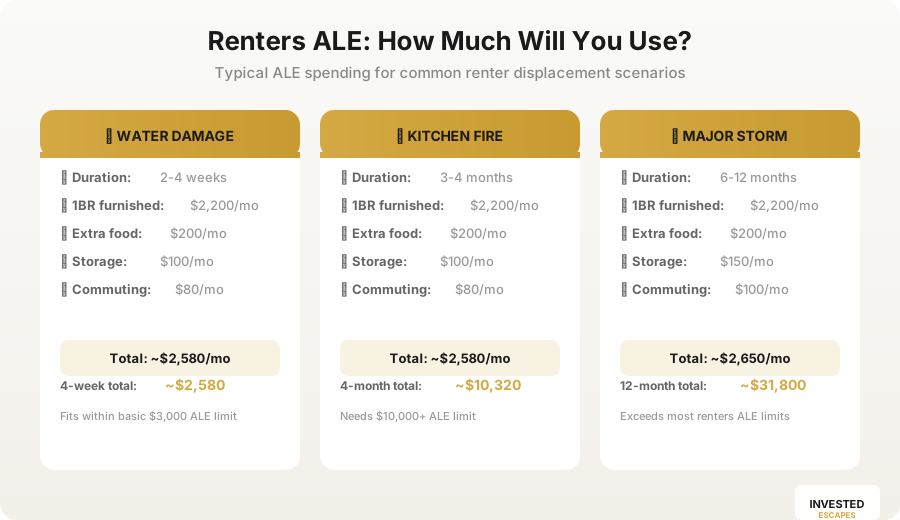
Water Damage — 2-4 Weeks — ~$2,580
A burst pipe floods your apartment. Drying, repairs, and mold prevention take 2-4 weeks. At ~$2,580/month in ALE expenses, a 4-week displacement uses approximately $2,580 — fitting within even a basic $3,000 ALE limit.
Kitchen Fire — 3-4 Months — ~$10,320
A kitchen fire causes smoke and water damage throughout the apartment. Repairs take 3-4 months. At ~$2,580/month, a 4-month displacement uses approximately $10,320 — requiring a $10,000+ ALE limit (standard $30,000 property coverage provides ~$6,000-$9,000 ALE, which may not be enough).
Major Storm — 6-12 Months — ~$31,800
A severe storm damages the building, requiring extensive structural repairs. You're displaced for 6-12 months. At ~$2,650/month, a 12-month displacement would use approximately $31,800 — far exceeding most renters ALE limits. This is why increasing your ALE limit matters.
If you have a basic renters policy with $15,000 in property coverage, your ALE limit may be only $3,000-$4,500 — enough for a short displacement but not for a multi-month one. Consider increasing your personal property coverage to $50,000+ to boost your ALE limit to $10,000-$15,000. The cost difference is typically just $5-10/month.
How to File a Renters ALE Claim
Filing an ALE claim through your renters insurance follows the same process as a homeowners claim. For a detailed guide, see our step-by-step ALE claim guide. Here's the quick version:
- 📸 Document the damage: Photos, video, and inventory before any cleanup
- 📞 File the claim: Call your renters insurance claims line, get a claim number
- 🤝 Meet the adjuster: Walk through the damage, confirm ALE coverage
- 🏠 Request a furnished home: Ask for Invested Escapes — don't settle for a hotel
- 🧳 Move in: IE places you within 24-72 hours of approval
- 📊 Track expenses: Keep all receipts, submit weekly to your adjuster
Can You Request a Furnished Home Through Renters ALE?
Yes — absolutely. Through your ALE coverage, you can request a furnished home instead of a hotel. Tell your adjuster you'd like to work with Invested Escapes as your temporary housing provider. We coordinate with your adjuster on placement, budget approval, and direct billing — so you don't front the money. You can be placed in a fully furnished home within 24-72 hours of approval.
- 🏠 Full furnished home: Full kitchen, private bedrooms, in-unit laundry, WiFi
- 📺 Smart TVs: In living area and bedrooms — log into your own profiles
- 💻 Dedicated workspace: Desk and ergonomic chair for remote work
- 🌳 Backyard: Private outdoor space for kids and pets
- 🔥 Grill: Gas or charcoal grill for outdoor cooking
- 🚗 Garage: Garage or dedicated parking
- 🔒 Fencing: Fenced yard for privacy and pet safety
- 🐕 Pet-friendly: Most IE properties welcome pets, including large dogs
- 💳 Direct insurance billing: We bill your insurance company directly — $0 to you
Sometimes multiple temporary housing providers may be involved in your placement. Some providers work interchangeably as relocation companies, and two may collaborate to find the best option. This is standard and best practice — don't be confused if more than one company contacts you. Invested Escapes has its own managed inventory AND can coordinate with other relocation companies.
Important: You Still Pay Rent on Your Damaged Rental
One thing that surprises many renters: you continue paying rent on your damaged rental while you're displaced. Your lease obligation doesn't pause because of damage — you still owe rent to your landlord. ALE does NOT cover your normal rent payment. It only covers the additional costs of living away from home. However, if your landlord cannot repair the rental within a reasonable timeframe, you may have legal grounds to break your lease — consult a tenant's rights attorney or your local housing authority.
How to Increase Your Renters ALE Coverage
If your current ALE limit seems low (check your declarations page), you can increase it by increasing your personal property coverage. Since ALE is calculated as a percentage of property coverage, more property coverage means more ALE. Here's how the upgrade typically works:
| Upgrade | Property Coverage | ALE Limit | Monthly Cost Increase |
|---|---|---|---|
| Basic → Standard | $15K → $30K | $3K → $6K-$9K | +$3-5/mo |
| Standard → Premium | $30K → $50K | $6K-$9K → $10K-$15K | +$5-8/mo |
| Premium → High-Value | $50K → $75K+ | $10K-$15K → $15K-$22.5K+ | +$8-15/mo |
For $5-10 more per month, you can double or triple your ALE coverage — from $3,000 to $10,000-$15,000. That's the difference between running out of coverage after 4 weeks and having enough for 4-6 months of displacement. Contact your insurance agent to upgrade.
For more help, see our complete renters insurance guide and our insurance housing guide. For a full overview, see our temporary housing guide.
Displaced from Your Rental?
If your rental is uninhabitable and you have renters insurance, tell us about your situation. We'll coordinate with your adjuster to place you in a furnished home — often within 24-72 hours.
Frequently Asked Questions
Does renters insurance include additional living expenses coverage?
Yes. Every standard HO-4 renters insurance policy includes ALE (Additional Living Expenses) coverage as a standard component. You don't need to buy it separately or add an endorsement. ALE pays for temporary housing and additional living costs if your rental becomes uninhabitable due to a covered loss like fire, water damage, or smoke damage. Your ALE limit is typically 20-30% of your personal property coverage limit.
How much ALE coverage do I have on my renters insurance?
Your ALE limit is typically 20-30% of your personal property coverage limit. If you have $30,000 in personal property coverage, your ALE limit would be approximately $6,000-$9,000. If you have $15,000 in property coverage, your ALE may be only $3,000-$4,500. Most policies also have a 12-month time cap. Check your policy declarations page for your exact limit. You can increase your ALE by increasing your property coverage — typically for just $5-10/month more.
Can I get a furnished home through my renters insurance ALE?
Yes. Through your ALE coverage, you can request a furnished home instead of a hotel — especially if you have children, pets, or expect to be displaced for more than two weeks. Tell your adjuster you'd like to work with Invested Escapes as your temporary housing provider. We coordinate with your adjuster on placement, budget, and direct billing, and can place you in a fully furnished home within 24-72 hours of approval.
What does renters insurance ALE cover?
Renters insurance ALE covers: temporary housing (furnished home or hotel), additional food costs above your normal spending, laundry, pet boarding (if your housing doesn't accept pets), storage for your belongings, increased commuting costs, moving costs, and utilities at your temporary residence. It pays the additional costs — the difference between what you'd normally spend and what you're spending while displaced. Keep all receipts and submit them to your adjuster weekly.
Do I still pay rent while displaced and using ALE?
Yes. You continue paying rent on your damaged rental while you're displaced — ALE does NOT cover your normal rent payment. Your lease obligation continues regardless of damage. ALE only covers the additional costs of living away from home (temporary housing, extra food, etc.). If your landlord cannot repair the rental within a reasonable timeframe, you may have legal grounds to break your lease — consult a tenant's rights attorney or your local housing authority.
How is renters ALE different from homeowners ALE?
The coverage categories are identical — both cover temporary housing, food, laundry, pet boarding, storage, commuting, and moving costs. The main difference is the dollar limit: renters ALE is typically $3,000-$15,000 (calculated from personal property coverage), while homeowners ALE is $30,000-$150,000 (calculated from dwelling coverage). Renters also typically have a 12-month time cap vs. 12-24 months for homeowners. Despite the lower limits, renters can still access furnished homes through Invested Escapes — the process is the same.
Need Corporate Housing?
Whether you're a property owner looking to earn income or a tenant needing a furnished home, Invested Escapes can help.