Temporary Housing During Home Renovation: Where to Stay
Where to live during a home renovation — furnished homes vs. hotels vs. Airbnb vs. staying with family, how to plan ahead, and what to expect when contractors take over your house.
Invested Escapes
Temporary Housing Experts
Home renovations are exciting — you're upgrading your living space, increasing your property value, and creating the home you've always wanted. But they're also disruptive. Dust in every room, contractors coming and going, water shut off without warning, power outages during electrical work, and rooms that are completely unusable for weeks or months. Living through a renovation is possible for small projects (a single bathroom, a kitchen refresh), but for whole-home renovations, additions, or major remodels, you need to move out. This guide covers your options for temporary housing during a home renovation, how to plan ahead, and why a furnished home is usually the best choice for maintaining your sanity during construction.
When Should You Move Out During a Renovation?
Not every renovation requires temporary housing. Here's a quick guide to when you should plan to move out versus when you can stay:
| Renovation Scope | Stay or Move Out? | Typical Timeline |
|---|---|---|
| 🚿 🚿 Single bathroom renovation | Stay (use other bathroom) | 1-3 weeks |
| 🍳 🍳 Kitchen renovation | Move out (or eat out daily) | 4-8 weeks |
| 🛏 Master suite remodel | Stay (use spare room) | 3-6 weeks |
| 🏠 Whole-home renovation | MOVE OUT — essential | 2-6 months |
| 🔧 Major electrical/plumbing | Move out (no water/power) | 1-3 weeks |
| 🏗 Room addition | Move out (structural work) | 2-4 months |
| 🎨 Interior paint/flooring | Stay (room by room) | 1-4 weeks |
| 🔨 Second story addition | MOVE OUT — essential | 3-6 months |
Rule of thumb: If the renovation affects your kitchen, your only bathroom, or the structural integrity of the home (which means dust, noise, and safety hazards throughout), plan to move out. The cost of temporary housing is almost always less than the cost of living through a major renovation — eating out every meal, paying for daily laundry, and the stress of living in a construction zone.
Your Housing Options During a Renovation
When you decide to move out during a renovation, you have four main options:
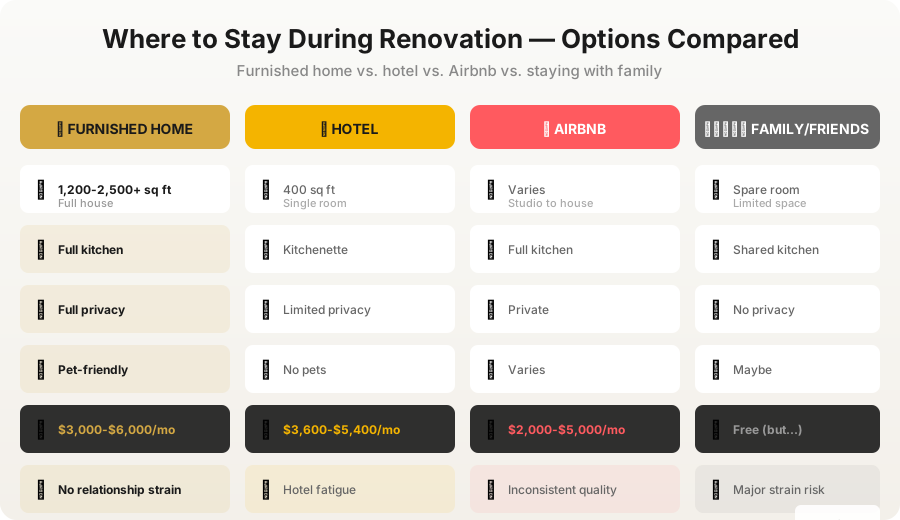
| Feature | 🏠 Furnished Home | 🏨 Hotel | 🛏 Airbnb | 👨👩👧 Family/Friends |
|---|---|---|---|---|
| 🏠 📐 Space | 1,200-2,500+ sq ft | 400 sq ft | Varies | Spare room |
| 🍳 🍳 Kitchen | Full kitchen | Kitchenette | Full kitchen | Shared |
| 🔒 🔒 Privacy | Full privacy | Limited | Private | No privacy |
| 🐕 🐕 Pets | Pet-friendly | No pets | Varies | Maybe |
| 💰 💰 Cost | $3,000-$6,000/mo | $3,600-$5,400/mo | $2,000-$5,000/mo | Free (but...) |
| 😬 Strain | No strain | Hotel fatigue | Inconsistent | Major strain risk |
| 🧺 🧺 Laundry | In-unit W/D | Paid | Varies | Shared |
| 📺 📺 Smart TV | Living room + bedrooms | One TV | Varies | Shared |
| 🎯 🎯 Best for | 1-6 month renovations | Short stays | Flexible travelers | 1-week max |
Why a Furnished Home Is the Best Choice for Renovation Housing
- 🏠 Real home environment: After a day of dealing with contractors, permits, and design decisions, you need a real home to come back to — not a hotel room. A full kitchen, living room, private bedroom, and backyard give you space to decompress.
- 🍳 Cook real meals: Renovation budgets are tight enough without spending $400+/week on restaurants. A full kitchen lets you cook normally while your real kitchen is under construction.
- 💻 Work from home: If you work remotely, a furnished home gives you a dedicated workspace with high-speed WiFi — essential when your normal home office is covered in drywall dust.
- 🐕 Keep your pets: Renovations are stressful for pets. A pet-friendly furnished home with a fenced yard keeps your animals comfortable and safe — no boarding required.
- 🎒 Keep kids in school: A furnished home in your school district means kids stay in their school. No mid-year transfers during an already-disruptive renovation.
- 🔄 Flexible timeline: Renovations almost always run longer than expected. A furnished home with month-to-month terms lets you extend your stay without penalty when your contractor says 'two more weeks.'
- 💰 Cost-effective: At $3,000-$6,000/month all-inclusive, a furnished home is often less expensive than a hotel ($3,600-$5,400/month) plus restaurant meals ($400+/week) plus paid laundry.
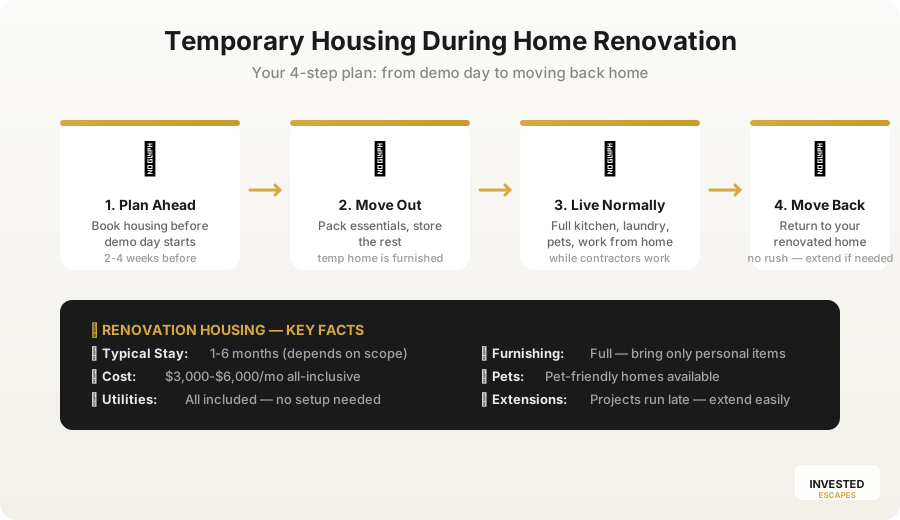
How to Plan for Renovation Housing
Step 1: Book Housing 2-4 Weeks Before Demo Day 📋
Don't wait until the day before construction starts. Book your temporary housing 2-4 weeks before demo day so you have time to move out gradually, pack belongings, and settle into your temporary home before the chaos begins. Contractors need clear access to your home — if you're still moving out while they're trying to demo walls, everyone loses time.
Step 2: Pack Smart — Essentials vs. Storage 📦
Your furnished temporary home comes with furniture, kitchenware, linens, and everything you need for daily living. You only need to bring personal items: clothes, toiletries, medications, work equipment (laptop, monitor), important documents, and sentimental items. Everything else can go into storage or stay in sealed rooms of your home that aren't being renovated.
- 📦 Essentials to bring: Clothes for the season, toiletries, medications, laptop/work equipment, important documents, kids' favorite toys, pet supplies.
- 📦 Leave in storage: Furniture (temp home is furnished), kitchen items (temp home has them), decorative items, books, seasonal items.
- 📦 Protect in place: Heavy furniture in non-renovation rooms can stay — cover with plastic sheeting to protect from dust.
Step 3: Live Normally During Construction 🏠
The beauty of a furnished home is that your life continues normally during the renovation. Cook meals, do laundry, work from your dedicated workspace, let the dog out in the fenced backyard, watch your own streaming profiles on smart TVs. Visit the construction site when you want to check progress, then return to a clean, quiet, dust-free home.
Step 4: Move Back When Ready 🏡
When the renovation is complete (and has passed final inspection), move back into your upgraded home. If the renovation runs longer than expected — which is very common — simply extend your temporary housing stay on a month-to-month basis. No pressure, no penalty.
What's Included in a Renovation Furnished Home
- 🛋 Furniture: Full furniture in every room — bedroom, living room, dining area, workspace.
- 🍳 Kitchen: Full kitchen with stove, oven, refrigerator, microwave, dishwasher, cookware, dishes, utensils.
- 🛏 Linens: Bedding, towels, pillows, blankets.
- ⚡ Utilities: Electricity, water, gas, high-speed internet, trash — all included.
- 📺 Smart TVs: In living area and bedrooms — log into your own streaming profiles.
- 💻 Workspace: Dedicated desk and ergonomic chair for remote work.
- 🧺 Laundry: In-unit washer and dryer — free, unlimited.
- 🔥 Grill: Gas or charcoal grill for outdoor cooking.
- 🚗 Garage: Garage or dedicated parking space.
- 🔒 Fencing: Fenced yard for privacy and pet safety.
- 🌳 Backyard: Outdoor space for kids and pets.
Tips for a Smooth Renovation Displacement
- 📅 Book early: Arrange housing 2-4 weeks before construction starts. Don't scramble at the last minute.
- 📐 Match your lifestyle: Request a home with a similar number of bedrooms and amenities to your permanent home — maintain normalcy.
- 📍 Stay nearby: Choose a temporary home close to your permanent home so you can visit the construction site regularly and keep kids in their school.
- 🔄 Plan for delays: Renovations almost always run late. Choose a housing provider with month-to-month flexibility.
- 🐕 Disclose pets: Tell your housing provider about pets upfront to ensure pet-friendly placement with a fenced yard.
- 💬 Stay in touch with your contractor: Regular communication with your contractor about timeline helps you plan your housing extension or move-back date.
- 📸 Document your home before renovation: Take photos of every room before demo starts — for insurance purposes and to compare before/after.
Sometimes multiple temporary housing providers may be involved in your placement. Some providers function as relocation companies, and two may work together to find the best option for your needs. This is standard — Invested Escapes has our own managed inventory AND can coordinate with other relocation companies to find you the right home.
If you're planning a home renovation and need temporary housing, contact Invested Escapes with your renovation timeline, location preferences, and family needs. We'll match you with a furnished home near your construction site — so you can live comfortably while your home is being transformed.
Learn more about how temporary housing works in our complete guide.
Temporary Housing Guide →For more help, see our complete guide to insurance housing and ALE and our renters insurance guide. If you need temporary housing during renovations, see our renovation housing guide.
Renovating Your Home?
Tell us about your renovation timeline, location preferences, and family needs. We'll match you with a furnished home near your construction site — so you can live comfortably during the remodel.
Frequently Asked Questions
Should I move out during a home renovation?
For small renovations (single bathroom, interior paint), you can often stay. But for whole-home renovations, kitchen remodels, major electrical or plumbing work, room additions, or structural changes, you should move out. Living in a construction zone exposes you to dust, noise, safety hazards, and periods without water or power. The cost of temporary housing is usually less than the cost of eating out every meal, paying for laundry, and the stress of living through construction.
How long do I need temporary housing for a renovation?
Typical renovation timelines range from 1-6 months depending on scope: kitchen renovation (4-8 weeks), whole-home renovation (2-6 months), room addition (2-4 months), second story addition (3-6 months). Always add 2-4 weeks to your contractor's estimate — renovations almost always run longer than planned. Choose a housing provider with month-to-month flexibility for extensions.
Where should I stay during a home renovation?
A furnished home is usually the best option for renovation housing. It gives you a full kitchen (to cook instead of eating out), in-unit laundry, private bedrooms, a workspace for remote work, pet-friendly options, and a backyard — all for $3,000-$6,000/month. Hotels cost more ($3,600-$5,400/month) with a fraction of the space. Staying with family is free but can strain relationships within weeks.
Can I stay in my school district during a renovation?
Yes. When booking temporary housing, specify your school district and request a placement within that district. A furnished home in your school zone means your children don't have to change schools during the renovation. Invested Escapes can match you with properties in specific school districts when you provide that requirement upfront.
Can I bring my pets to temporary housing during a renovation?
Yes, many furnished temporary housing properties are pet-friendly — including large dogs. Renovations are stressful for pets (noise, dust, strangers in the home), so moving them to a quiet furnished home with a fenced yard is much better than leaving them in the construction zone. Specify your pet's type, breed, and size when requesting housing to ensure pet-friendly placement.
How much does temporary housing cost during a renovation?
A furnished home typically costs $3,000-$6,000/month all-inclusive (rent, furniture, utilities, internet, kitchenware, linens). Compare this to an extended-stay hotel at $3,600-$5,400/month ($120-$180/night) plus $400+/week in restaurant meals and paid laundry. The furnished home is often less expensive overall — with far more space and comfort.
Need Corporate Housing?
Whether you're a property owner looking to earn income or a tenant needing a furnished home, Invested Escapes can help.