Homeowners Insurance Temporary Housing: What You Need to Know
A complete guide to temporary housing through homeowners insurance — how Coverage D/ALE works, what it covers, how much you get, and how to request a furnished home instead of a hotel.
Invested Escapes
Temporary Housing Experts
If you own a home and it's damaged by fire, water, or a storm, your homeowners insurance includes temporary housing coverage — also known as Additional Living Expenses (ALE), Loss of Use, or Coverage D. This coverage pays for a furnished home or hotel, additional food costs, and other living expenses while your home is being repaired. But most homeowners never read the ALE section of their policy until they need it — and by then, they're already displaced, stressed, and navigating an unfamiliar process. This guide gives you everything you need to know about homeowners insurance temporary housing before you need it: what's covered, how much you get, what triggers it, and how to make sure you get a furnished home instead of a hotel room. For a deeper dive on the ALE process, see our guide to how ALE insurance works.
What Is Homeowners Insurance Temporary Housing?
Temporary housing through your homeowners insurance is a furnished home, hotel, or other lodging provided — and paid for — by your insurance policy when your home becomes uninhabitable due to a covered loss. It's part of Coverage D: Loss of Use on your standard HO-3 homeowners policy, and it includes both Additional Living Expenses (ALE) and potential Fair Rental Value coverage if you were renting out part of your home.
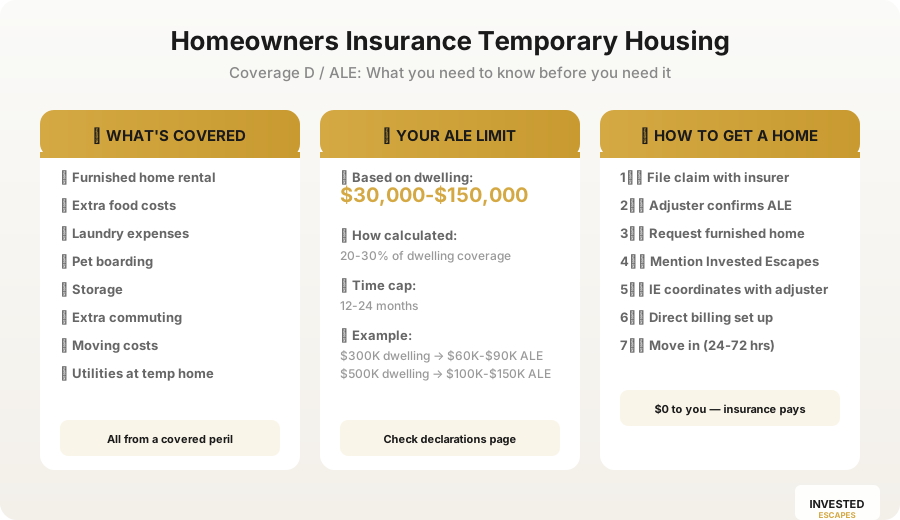
Key takeaway: Your homeowners insurance includes temporary housing coverage automatically. If a covered peril damages your home and makes it uninhabitable, your insurance pays for a furnished home or hotel plus additional living expenses — up to your ALE limit (typically $30,000-$150,000).
What Does Temporary Housing Coverage Include?
Coverage D / ALE pays for more than just a place to sleep. It covers all the additional costs of living away from home when your house is uninhabitable:
- 🏠 Temporary housing: Furnished home, hotel, or extended-stay property — your choice
- ⚡ Utilities at temp residence: Electricity, water, gas, internet — if not included in the housing rate
- 🍽 Additional food costs: Extra meal costs above your normal grocery spending
- 🧺 Laundry expenses: If no in-unit laundry at your temporary location (IE homes include it)
- 🐕 Pet boarding: If your temporary housing doesn't accept pets — request pet-friendly to avoid this
- 📦 Storage costs: For belongings removed from your damaged home
- 🚗 Increased commuting costs: Extra mileage to work or school from your temporary location
- 🚚 Moving costs: Moving belongings into temporary housing and back home
- 📺 Internet and streaming: If not included in the temporary housing rate
What Triggers Temporary Housing Coverage?
ALE coverage only activates when your home becomes uninhabitable due to a covered peril — a specific event listed in your policy. "Uninhabitable" means the home is not safe or functional: no working plumbing, structural damage, fire damage, unsafe air quality, or no electricity. Here's what triggers coverage — and what doesn't:
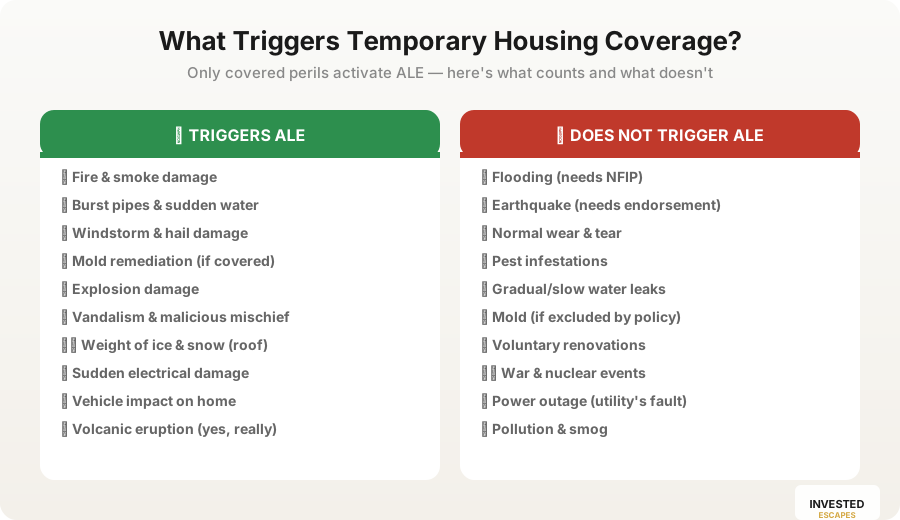
Covered Perils That Trigger ALE ✅
- 🔥 Fire and smoke: The most common ALE trigger — even a small kitchen fire can cause months of displacement
- 💧 Burst pipes and sudden water: Sudden or accidental water damage from plumbing, appliances, or HVAC
- 🌪 Windstorm, hail, and tornadoes: Severe storms damaging roofs, windows, and structure
- 🦠 Mold remediation: If your policy covers mold and remediation requires vacating the home
- 💥 Explosion: Gas explosions or other accidental explosions
- 🔨 Vandalism and malicious mischief: Intentional damage that renders the home uninhabitable
- ❄️ Weight of ice and snow: Roof collapse or structural damage from accumulated snow
- ⚡ Sudden electrical damage: Power surges or electrical fires damaging home systems
NOT Covered ❌
- 🌊 Flooding: Requires separate NFIP flood insurance — standard homeowners policies never cover flooding
- 🌍 Earthquakes: Requires a separate earthquake endorsement or standalone policy
- 📉 Wear and tear: Normal aging, deterioration, and maintenance issues are not covered perils
- 🔧 Voluntary renovations: ALE only covers repairs from covered perils — not voluntary upgrades or remodeling
- 🐛 Pest damage: Termites, rodents, bedbugs, and other infestations are considered maintenance issues
- 💧 Gradual water damage: Slow leaks that develop over time are excluded — only sudden and accidental events are covered
Important: Temporary housing coverage does NOT apply to voluntary renovations. If you're remodeling your kitchen or upgrading your bathroom, ALE will not pay for temporary housing. ALE only activates when the damage is from a covered peril that makes your home uninhabitable.
How Much Temporary Housing Coverage Do You Have?
Your ALE limit is typically 20-30% of your dwelling coverage limit (Coverage A). If your home is insured for $300,000, your ALE limit would be approximately $60,000-$90,000. Most policies also impose a time limit of 12 to 24 months. Check your policy declarations page for exact numbers.
| Dwelling Coverage | ALE Limit (20-30%) | Monthly Housing Cost | Approx. Months Covered |
|---|---|---|---|
| $150,000 | $30,000-$45,000 | $3,000-$5,000/mo | 6-15 months |
| $300,000 | $60,000-$90,000 | $3,000-$6,000/mo | 10-30 months |
| $500,000 | $100,000-$150,000 | $4,000-$8,000/mo | 12-37 months |
| $750,000 | $150,000-$225,000 | $5,000-$10,000/mo | 15-45 months |
Furnished Home vs. Hotel: What You're Entitled To
When your ALE coverage activates, your insurance company is obligated to provide comparable living arrangements — temporary housing similar in size and quality to your damaged home. If you own a 3-bedroom house, your ALE should cover a furnished 3-bedroom home, not a single hotel room. Here's how the options compare:
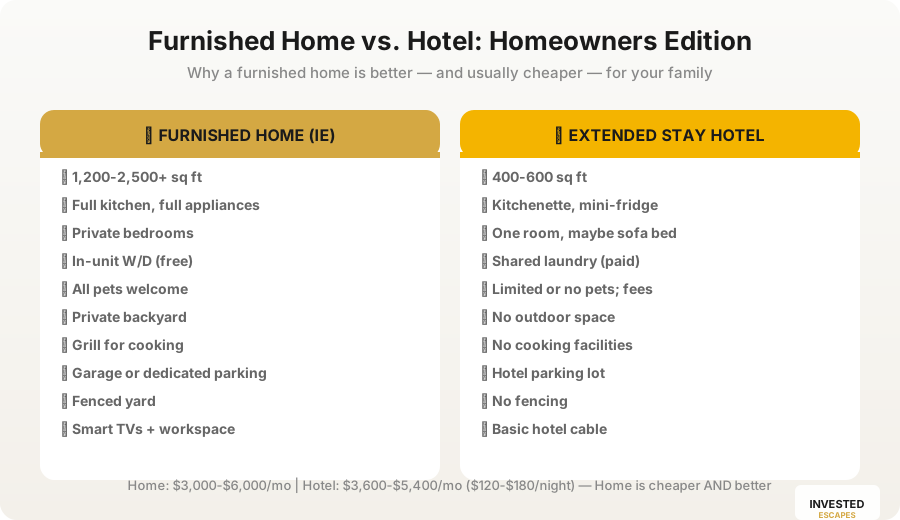
| Feature | 🏠 Furnished Home (IE) | 🏨 Extended Stay Hotel |
|---|---|---|
| 🏠 📐 Space | 1,200-2,500+ sq ft | 400-600 sq ft |
| 🍳 🍳 Kitchen | Full kitchen, full-size appliances | Kitchenette, mini-fridge |
| 🛏 🛏 Bedrooms | Private bedrooms for each family member | One room, maybe pull-out sofa |
| 🧺 🧺 Laundry | In-unit washer/dryer (free) | Shared laundry room (paid) |
| 🐕 🐕 Pets | Pet-friendly, including large dogs | Limited or not allowed; daily pet fees |
| 🌳 🌳 Backyard | Private yard for kids and pets | No outdoor space |
| 🔥 Grill | Gas or charcoal grill for outdoor cooking | No cooking facilities |
| 🚗 🚗 Garage | Garage or dedicated parking | Hotel parking lot |
| 🔒 🔒 Fencing | Fenced yard for privacy and pet safety | No fencing |
| 📺 📺 Smart TV | Smart TVs — log into your own profiles | Basic hotel cable |
| 🏠 💻 Workspace | Dedicated desk for remote work | Small desk or none |
| 💰 💰 Monthly cost | $3,000-$6,000/month (all-inclusive) | $3,600-$5,400/month ($120-$180/night) |
You are entitled to comparable housing — not just a hotel room. If you own a 3-bedroom home, ask your adjuster for a furnished 3-bedroom home through Invested Escapes. A furnished home is better for your family AND often less expensive for the insurance company.
How to Get a Furnished Home Through Your Homeowners Insurance
When you file a claim and your adjuster confirms ALE coverage, they may default to booking you into a hotel. You can — and should — request a furnished home instead. Here's exactly what to do:
- 💬 Tell your adjuster: "My home is uninhabitable and I need ALE housing. I'd like to request a furnished home instead of a hotel — I have a family and we need a full kitchen, private bedrooms, and space for our pets."
- 🏠 Mention Invested Escapes: "I'd like to work with Invested Escapes as my temporary housing provider. They can coordinate with you on placement, budget, and direct billing."
- 📋 Provide your needs: Number of bedrooms, location preferences (school district, commute), pet requirements, accessibility needs, and estimated length of stay
- ⚡ Fast placement: Invested Escapes places you within 24-72 hours of your adjuster's approval
- 💳 Direct billing: We bill your insurance company directly — you don't front the money
- 📺 Full amenities: Smart TVs, dedicated workspace, grill, backyard, garage, fencing — everything you'd have at home
Sometimes multiple temporary housing providers may be involved in your placement. Some providers work interchangeably as relocation companies, and two may collaborate to find the best option. This is standard and best practice — don't be confused if more than one company contacts you. Invested Escapes has its own managed inventory AND can coordinate with other relocation companies. The focus is on finding the RIGHT property for your family.
What If Your Home Is Being Renovated (Not from a Covered Loss)?
A common question: does homeowners insurance cover temporary housing during renovations? The answer is: only if the renovation is necessary due to a covered peril. If a fire damaged your kitchen and the repairs require you to vacate, ALE covers your temporary housing. If you're voluntarily remodeling your kitchen — upgrading cabinets, installing new countertops — ALE does NOT cover temporary housing. Voluntary renovations are not covered by insurance. For more on this topic, see our guide on what to do when your home is damaged.
What If Your ALE Claim Is Denied?
If your adjuster denies ALE coverage — usually because they determine the damage was from an excluded peril — you have options:
- 📖 Review your policy: Read the Coverage D section carefully and check what perils are listed as covered
- 📸 Get a second opinion: If you believe the damage is from a covered peril, get an independent or public adjuster to review your claim
- ⚖️ File an appeal: Most insurance companies have an internal appeals process — file a formal appeal with additional documentation
- 📞 Contact your state insurance commissioner: File a complaint with your state's department of insurance
- 👨⚖️ Consult an insurance attorney: For large claims, an attorney who specializes in insurance disputes can help — many offer free consultations
How to Prepare Before You Need Temporary Housing
The best time to understand your temporary housing coverage is before you need it. Here's what to do now:
- 📖 Read your policy: Find your Coverage D / ALE limit on the declarations page — know the dollar amount and time cap
- 💰 Check if your ALE is adequate: If you have $150,000 in dwelling coverage and $30,000 in ALE, that may only cover 5-6 months of displacement. Consider increasing your dwelling coverage to boost ALE
- 📸 Create a home inventory: Document your belongings now — photos, video, and a written inventory. This saves enormous time if you ever file a claim
- 📝 Save your policy info: Keep your policy number, claims phone number, and agent's contact info in your phone and a physical copy
- 🏠 Know Invested Escapes: Bookmark our contact information so you can request us as your temporary housing provider if you ever need to file a claim
If your home has been damaged and you need temporary housing, contact your insurance company to file a claim and request ALE coverage. Ask for a furnished home through Invested Escapes — we'll coordinate with your adjuster to place you within 24-72 hours. Don't settle for a hotel room when you're entitled to a furnished home.
For more help, see our complete renters insurance guide and our insurance housing guide. For a full overview, see our temporary housing guide.
Need Temporary Housing Through Your Homeowners Insurance?
If your home is uninhabitable and you have homeowners insurance, tell us about your situation. We'll coordinate with your adjuster to place you in a furnished home — often within 24-72 hours.
Frequently Asked Questions
Does homeowners insurance cover temporary housing?
Yes. Every standard HO-3 homeowners insurance policy includes Coverage D (Loss of Use), which provides Additional Living Expenses (ALE) coverage. If a covered peril — fire, burst pipe, windstorm, or other covered event — makes your home uninhabitable, ALE pays for temporary housing (furnished home or hotel), additional food costs, and other living expenses while your home is being repaired. Your ALE limit is typically 20-30% of your dwelling coverage limit.
How much temporary housing coverage do I have on my homeowners policy?
Your ALE limit is typically 20-30% of your dwelling coverage limit (Coverage A). If your home is insured for $300,000, your ALE limit would be approximately $60,000-$90,000. If insured for $500,000, your ALE would be $100,000-$150,000. Most policies also impose a time limit of 12-24 months. Check your policy declarations page for your exact ALE limit and time cap.
Can I get a furnished home instead of a hotel through my homeowners insurance?
Yes. Your ALE coverage entitles you to comparable living arrangements — temporary housing similar in size and quality to your damaged home. If you own a 3-bedroom house, you can request a furnished 3-bedroom home instead of a hotel room. Ask your adjuster to work with Invested Escapes, who can place you within 24-72 hours and bill the insurance company directly. A furnished home is better for your family AND often less expensive for the insurance company.
Does homeowners insurance cover temporary housing during renovations?
Only if the renovation is necessary due to a covered peril — like repairing fire, water, or storm damage. If you're voluntarily renovating your home (upgrading a kitchen, remodeling a bathroom), homeowners insurance does NOT cover temporary housing. ALE only applies when the damage is from a covered loss that makes your home uninhabitable, not from voluntary improvements or routine maintenance.
What perils trigger temporary housing coverage on a homeowners policy?
Temporary housing coverage activates when your home becomes uninhabitable due to a covered peril: fire, smoke damage, burst pipes and sudden water damage, windstorm, hail, tornado, explosion, vandalism, weight of ice and snow, and sudden electrical damage. Flooding and earthquakes are NOT covered by standard homeowners insurance and require separate policies.
How do I request a furnished home through my homeowners insurance?
Tell your adjuster: "My home is uninhabitable and I need ALE housing. I'd like a furnished home instead of a hotel, and I'd like to work with Invested Escapes as my temporary housing provider." Provide your needs (bedrooms, location, pets, accessibility), and IE will coordinate with your adjuster on placement, budget approval, and direct billing. You can be placed in a fully furnished home within 24-72 hours of approval — at no cost to you.
Need Corporate Housing?
Whether you're a property owner looking to earn income or a tenant needing a furnished home, Invested Escapes can help.