Temporary Housing for Flood Victims: A Step-by-Step Guide
If your home has been flooded, this guide walks you through every step — flood insurance vs. homeowners insurance, filing your claim, ALE coverage, and getting placed in a furnished temporary home.
Invested Escapes
Temporary Housing Experts
Flood displacement is uniquely devastating. Unlike a fire, which destroys belongings but often leaves the structure intact for rebuilding, flooding can render a home uninhabitable for weeks or months due to water saturation, mold growth, electrical damage, and structural compromise. And the insurance situation is more complex: standard homeowners insurance does NOT cover flooding from storms, overflowing rivers, or storm surge. You need a separate flood insurance policy — either through the National Flood Insurance Program (NFIP) or a private insurer. This guide walks you through what to do after a flood, how to navigate the insurance process, and how to get placed in a furnished temporary home while your house is dried out, repaired, and made safe again.
Step 1: Safety First — Don't Re-enter Too Soon
After floodwaters recede, the danger isn't over. Flood-damaged homes contain toxic contaminants (sewage, chemicals, mold), structural damage (compromised foundations, weakened floors), and electrical hazards (water and wiring don't mix). Do NOT re-enter your home until local authorities have cleared it as structurally safe.
- ⚠ Wait for official clearance: Local emergency management or building inspectors must confirm your home is safe to enter.
- 🦠 Mold starts within 24-48 hours: Flood-damaged homes begin growing mold almost immediately. Professional remediation is essential.
- 🔌 Electrical danger: Do not turn on power to a flooded home. Have an electrician inspect the system first.
- 🚰 Water contamination: Flood water is Category 3 (black water) — assume it's contaminated with sewage and chemicals.
- 📞 Contact FEMA: If your area has been declared a federal disaster area, register with FEMA at DisasterAssistance.gov or 1-800-621-3362 for additional assistance beyond insurance.
Step 2: Understand Your Insurance Coverage
The most critical thing to understand about flood insurance is this: standard homeowners insurance does NOT cover flooding. If your home was flooded by a storm, overflowing river, storm surge, or rising groundwater, you need a separate flood insurance policy — either through the NFIP (federal) or a private flood insurer.
Critical: Homeowners insurance covers water damage from a BURST PIPE (sudden, accidental) but NOT from flooding (rising water from outside). If your home was flooded by a storm, river, or storm surge, only a flood insurance policy will cover the damage and your displacement housing.
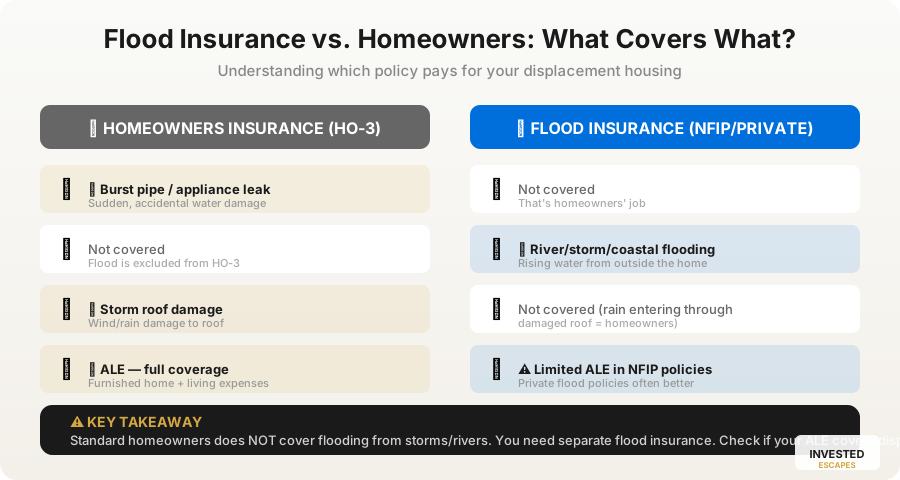
What Each Policy Covers for Displacement
| Coverage | 🏠 Homeowners (HO-3) | 🌊 Flood Insurance (NFIP) | 🌊 Private Flood Insurance |
|---|---|---|---|
| 💧 Burst pipe water damage | ✅ Covered + ALE for housing | ❌ Not covered | ❌ Not covered |
| 🌊 Storm/river flooding | ❌ Not covered | ✅ Covered (building + contents) | ✅ Covered |
| 🏠 ALE / Loss of Use | ✅ Full ALE coverage | ⚠ Limited or none in standard NFIP | ✅ Often includes ALE |
| 🧳 Temporary housing | ✅ Furnished home or hotel | ⚠ May not include housing | ✅ Check your policy |
| 📦 Contents | ✅ Personal property covered | ✅ Up to $100,000 (NFIP limit) | ✅ Varies by policy |
If you have NFIP flood insurance, ALE/loss-of-use coverage may be limited or not included in standard policies. However, if the flood was caused by a covered event under your homeowners policy (e.g., wind damage that allowed rain to enter through a damaged roof), your homeowners ALE may still apply. Check with your adjuster to determine which policy applies.
Step 3: File Your Insurance Claim
File your claim as soon as safely possible. Whether you're filing through flood insurance, homeowners insurance, or both, the process is similar:
1. Document All Damage 📸
Before any cleanup, take extensive photos and video of all flood damage — every room, the water line on walls, damaged furniture, flooded appliances, and the exterior of the property showing the source of flooding. Make an inventory of damaged items with approximate values. This documentation is your proof of loss.
2. Contact Your Insurance Company 📞
Call your insurance company's claims line. If you have both homeowners and flood insurance, contact BOTH — let them determine which policy applies. You'll receive a claim number and an adjuster will be assigned. For NFIP claims, a flood adjuster will visit your property to assess damage.
3. Request ALE Housing 🏠
Tell your adjuster your home is uninhabitable and you need temporary housing. If your ALE coverage is active, specifically request a furnished home instead of a hotel — especially if you have children, pets, or anticipate being displaced for more than two weeks. Mention Invested Escapes as your preferred temporary housing provider.
4. Mitigate Further Damage 🔧
Your insurance policy requires you to take reasonable steps to prevent further damage. This may include tarping a damaged roof, removing standing water, beginning drying/dehumidification, and securing the property. Keep all receipts — these mitigation costs are typically reimbursable.
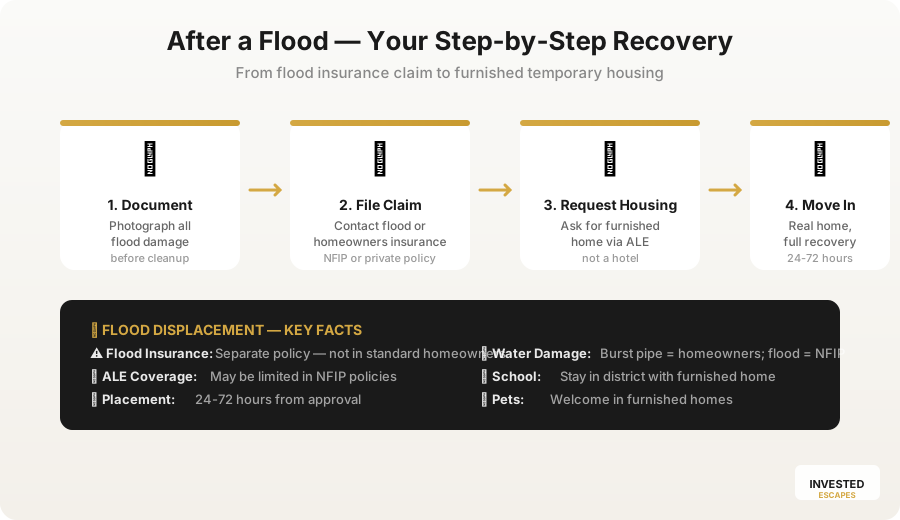
Step 4: Move into Temporary Housing
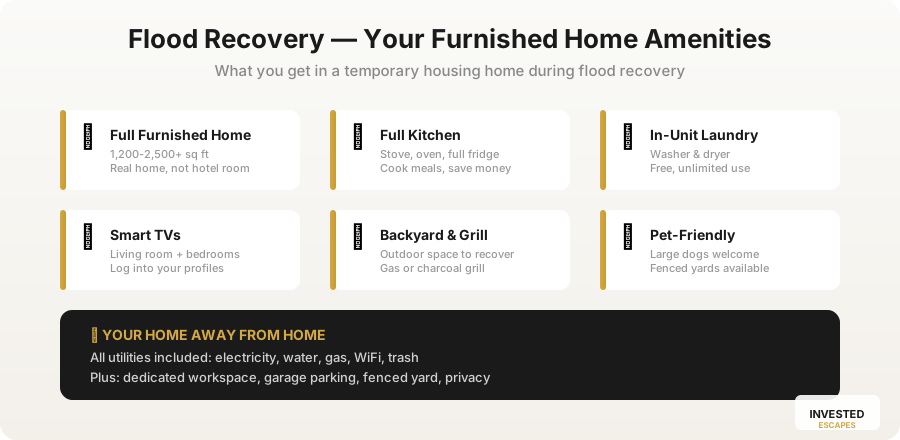
Once your adjuster authorizes ALE housing, a temporary housing provider like Invested Escapes can place you in a fully furnished home within 24-72 hours. Here's what you can expect in your temporary home:
- 🏠 Full furnished home: 1,200-2,500+ sq ft of living space — a real home, not a hotel room.
- 🍳 Full kitchen: Stove, oven, full-size refrigerator, dishwasher, microwave, cookware, dishes, and utensils.
- 🧺 In-unit laundry: Washer and dryer — free and unlimited. No more hotel laundry rooms.
- 📺 Smart TVs: In the living room and bedrooms — log into your own streaming profiles.
- 💻 Dedicated workspace: Desk and ergonomic chair for remote work or handling insurance paperwork.
- ⚡ All utilities included: Electricity, water, gas, high-speed internet, and trash — all in one monthly rate.
- 🔥 Grill: Gas or charcoal grill for outdoor cooking.
- 🚗 Garage or dedicated parking: Safe, secure parking.
- 🔒 Fenced yard: Privacy and safety — especially important for pets and children.
- 🌳 Backyard: Outdoor space to decompress during a stressful recovery period.
- 🐕 Pet-friendly: Your pets stay with the family — no traumatic separation during displacement.
What to Expect During Flood Recovery
Flood recovery is typically longer than fire recovery because of the extensive drying, remediation, and reconstruction process:
| Phase | Timeline | What Happens |
|---|---|---|
| 📸 Assessment | Week 1-2 | Adjuster inspects damage. Water extraction begins. Drying equipment deployed. |
| 🦠 Mold remediation | Week 2-4 | Mold treatment, removal of damaged drywall, flooring, and insulation. |
| 🔧 Structural repairs | Month 1-6 | Rebuilding walls, floors, electrical, plumbing, and HVAC systems. |
| 🏠 Reconstruction | Month 3-9 | Interior finishing, flooring, cabinets, paint, fixtures. |
| ✅ Final inspection | Month 6-12 | Building inspection, clearance testing, ready to move back. |
Flood recovery can take 6-12 months or longer, depending on the extent of damage, contractor availability, and local building permit processes. After major floods, contractors in the area are overwhelmed — which extends timelines. Your temporary housing provider should offer month-to-month flexibility for exactly this reason.
FEMA Assistance for Flood Victims
If your area has been declared a federal disaster area, FEMA provides assistance beyond what insurance covers. This can include:
- 🏠 Temporary housing assistance: FEMA may provide funds for temporary lodging if your insurance doesn't cover it.
- 💰 Grants for repairs: Up to ~$40,000 for uninsured/underinsured property damage.
- 🚽 Replacement of essential items: Furniture, appliances, essential household items.
- 🏥 Medical and dental costs: Disaster-related medical expenses.
- 🚗 Vehicle replacement: If your vehicle was damaged in the flood.
- ⚰ Funeral expenses: Disaster-related funeral costs.
Register with FEMA at DisasterAssistance.gov or call 1-800-621-3362 as soon as possible after the disaster declaration. Keep all receipts and documentation of your losses.
Tips for Flood Displacement Recovery
- 📸 Photograph everything: Document water lines, damaged items, and structural damage before cleanup begins.
- 🧾 Save every receipt: Meals, lodging, mileage, moving, storage, mitigation — everything is potentially reimbursable.
- ⚠ Don't throw away damaged items: Your adjuster needs to see them. If you must dispose of items for safety, photograph them first and keep samples of materials (carpet, drywall) for the adjuster.
- 🦠 Address mold immediately: Mold grows fast in flooded homes. Professional remediation is essential — don't try to handle it yourself.
- 🐕 Keep pets with you: Request a pet-friendly furnished home. Separating from pets during a disaster adds unnecessary trauma.
- 🎒 Keep kids in school: Request temporary housing in your school district so children don't have to change schools mid-year.
- 📅 Plan for a long stay: Flood recovery takes 6-12+ months. Choose a housing provider that offers month-to-month extensions.
Sometimes multiple temporary housing providers may be involved in your placement. Some providers work as relocation companies, and two may coordinate with your insurance company to find the best option for your family. This is standard — Invested Escapes has our own managed inventory AND can coordinate with other relocation companies to find you the right home.
If you've been displaced by a flood, contact your insurance adjuster and request Invested Escapes as your temporary housing provider. We'll coordinate with your insurance company to place you in a furnished home — often within 24-72 hours of approval. You can have a real home with a full kitchen, private bedrooms, in-unit laundry, and your pets by your side while your home is being repaired.
Learn more about insurance housing and ALE coverage in our complete guide.
Insurance Housing Guide →See our guide for fire victims for additional displacement recovery steps.
Fire Victims Housing Guide →For more help, see our complete guide to insurance housing and ALE and our renters insurance guide. If you need temporary housing during renovations, see our renovation housing guide.
Displaced by a Flood?
If your home has been flooded and you need temporary housing, tell us about your situation. We'll coordinate with your insurance adjuster to place you in a furnished home — often within 24-72 hours.
Frequently Asked Questions
Does homeowners insurance cover temporary housing after a flood?
Standard homeowners insurance does NOT cover flooding from storms, overflowing rivers, or storm surge — and therefore may not cover temporary housing after a flood. You need a separate flood insurance policy (NFIP or private) for flood damage. However, if your ALE/loss-of-use coverage on your homeowners policy is triggered by a covered event (like wind damage that allowed rain to enter), it may pay for temporary housing. Check with your adjuster to determine which policy applies.
How do I get temporary housing after a flood?
File your insurance claim immediately, tell your adjuster your home is uninhabitable, and request a furnished home through your ALE coverage. If you have flood insurance with ALE coverage, the process is the same as with homeowners insurance. If your flood insurance doesn't include ALE, check if your homeowners ALE applies, and register with FEMA for temporary housing assistance at DisasterAssistance.gov.
How long does flood recovery take?
Flood recovery typically takes 6-12 months, depending on the extent of damage, mold remediation requirements, contractor availability, and local building permit processes. After major floods, local contractors are overwhelmed, which extends timelines. Your temporary housing provider should offer month-to-month flexibility to accommodate extended stays.
Can I get a furnished home instead of a hotel after a flood?
Yes. If your ALE coverage is active, you can request a furnished home instead of a hotel — especially if you have children, pets, or anticipate being displaced for more than two weeks. A furnished home gives you a full kitchen, private bedrooms, in-unit laundry, a backyard, and pet-friendly options. Ask your adjuster to work with a temporary housing provider like Invested Escapes.
What should I do immediately after my home floods?
First, ensure safety — don't re-enter until authorities clear the building. Second, document all damage with photos and video before any cleanup. Third, file insurance claims with both your homeowners and flood insurance companies. Fourth, register with FEMA if your area is a declared disaster area. Fifth, request temporary housing through your ALE coverage and ask for a furnished home.
Does FEMA provide temporary housing after floods?
If your area has been declared a federal disaster area, FEMA may provide temporary housing assistance — especially if your insurance doesn't cover displacement. FEMA assistance can include funds for temporary lodging, grants for repairs, and replacement of essential items. Register at DisasterAssistance.gov or call 1-800-621-3362 as soon as possible after the disaster declaration.
Need Corporate Housing?
Whether you're a property owner looking to earn income or a tenant needing a furnished home, Invested Escapes can help.